
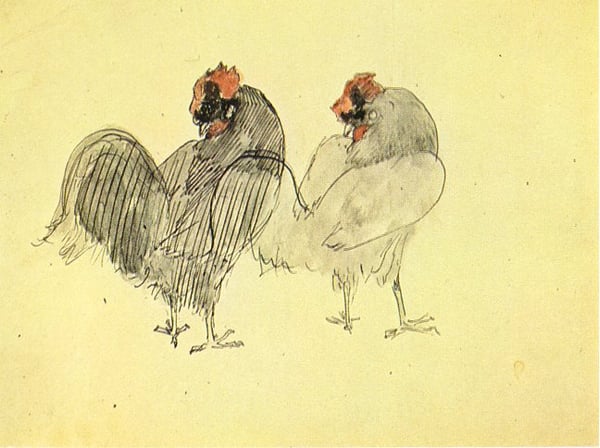
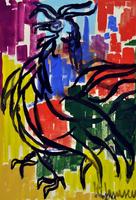
Expertenanalyse zu Pablo Picassos Two roosters
Stil: Post-Impressionism · Genre: animal painting
Expert Analysis of "Two Roosters" by Pablo Picasso
Pablo Picasso’s Two Roosters is a compelling example of his Rose Period (c. 1904–1906), a transitional phase marked by a shift from the somber, blue-toned melancholy of his earlier work to a warmer palette of pinks, ochers, and earthy reds. Though the painting belongs to the Post-Impressionist style, it already hints at the expressive distortion that would later define Cubism.
Significance within the Rose Period and Post-Impressionism:
-
Subject and Symbolism: Animal paintings are relatively rare within Picasso’s Rose Period, which predominantly features circus performers, harlequins, and itinerant acrobats. Two Roosters is significant for its departure from human figures, focusing instead on the raw, combative energy of nature. The roosters—often symbols of virility, aggression, and Gallic pride—allow Picasso to explore themes of confrontation and vitality without the narrative weight of his human subjects.
-
Color and Mood: True to the Rose Period, Picasso employs a soft, warm palette—pale pinks, dusty oranges, and muted golds—that softens the inherent aggression of two fighting birds. This creates a tension between subject matter and execution: the potentially violent scene is rendered with tender, lyrical brushwork, reflecting the Post-Impressionist interest in emotional expression over literal depiction.
-
Form and Composition: The painting exhibits Post-Impressionist traits such as simplified forms, broken outlines, and a flattening of pictorial space. Picasso distills the roosters into essential shapes—curving necks, sharp beaks, fanning tails—while the background remains deliberately vague. This focus on the interplay of abstracted forms (the birds’ arcs and angles) anticipates his later, more radical explorations of form in Cubism.
-
Transitional Quality: Two Roosters captures a pivotal moment in Picasso’s career. It bridges the emotional introspection of his Blue Period (where animals, if present, were often emaciated and sorrowful) and the exuberant, almost theatrical energy of his Rose Period subjects. The roosters’ spirited stance embodies the new optimism and creative confidence that defines this era.
In summary, Two Roosters is significant not only as a rare Rose Period animal study but also as a work that leverages Post-Impressionist color and form to convey a primal, yet refined, drama of nature—foreshadowing the innovative leaps Picasso would soon take.
Visuell ähnlich
20 Werke mit ähnlicher Komposition und Farbpalette
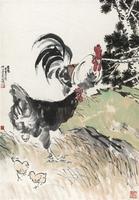
Roosters and Chicks
Xu Beihong
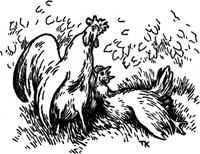
Tuppen Och Hoenan
Theodor Severin Kittelsen
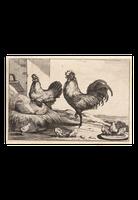
The Cock
Wenceslaus Hollar
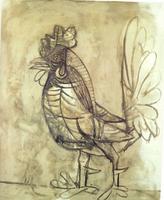
A rooster
Pablo Picasso
The Cock and the Hen
Pierre Bonnard
Rooster and Hen
Ohara Koson
Chicken
Shin Yoon-bok
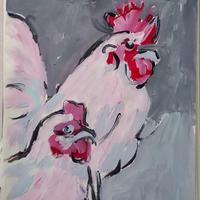
Despertar
Paulo Fontes
Des+ertar
Paulo Fontes
Sketch of a Hen
Vincent van Gogh
Coq et Poules
Theophile Steinlen
Despertar
Paulo Fontes
Despertar
Paulo Fontes
No
Theophile Steinlen
Rooster and Hen at Sunrise
Ohara Koson
UNTITLED (ROOSTER)
Alexander Calder
Fowl In A Damson Tree
Charles Tunnicliffe
Sketches of a Hen and a Cock
Vincent van Gogh
Bathen
Sue Coe
Pride
George Stefanescu