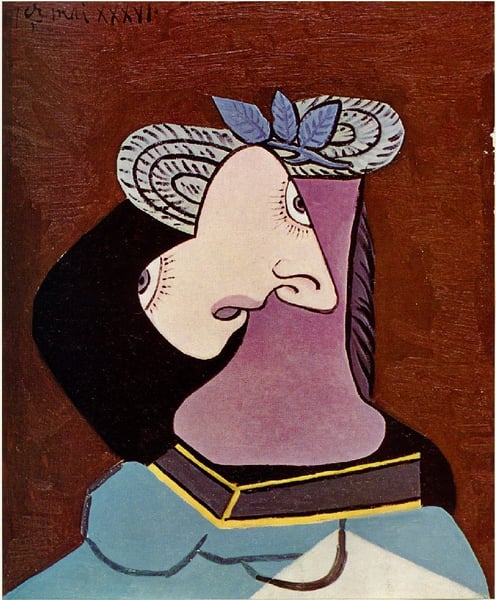
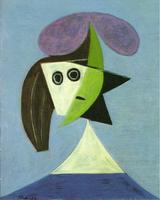
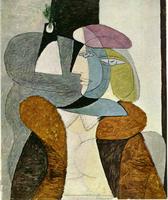
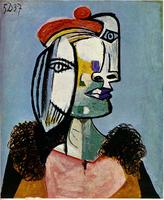
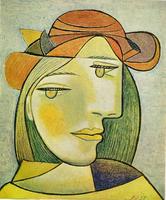
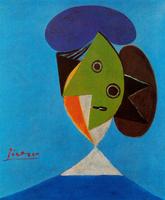
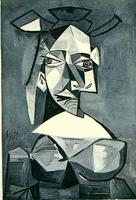
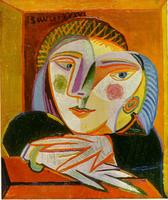
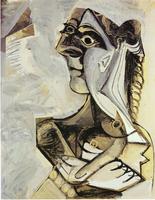
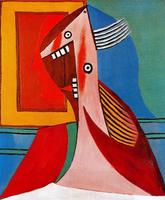
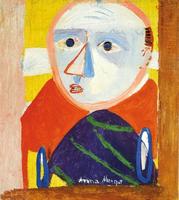
"The Straw Hat with Blue Leaves" by Pablo Picasso, from his Neoclassicist & Surrealist Period (c. 1930s), is a portrait that crystallizes the tension between order and dreamlike disruption central to his Surrealist output. The work’s significance lies in its subversion of traditional portraiture: a seemingly conventional sitter is fused with the absurd motif of blue leaves—an unnatural, symbolic intrusion that defies naturalistic color and logic. This juxtaposition of a recognizable human subject (the genre of portrait) with surreal, vegetal elements exemplifies Picasso’s method of blending classical structure with irrational, subconscious imagery, a hallmark of his Surrealist phase. The “straw hat” anchors the figure in everyday reality, while the blue leaves introduce a hallucinatory rupture, reflecting Surrealism’s aim to free the mind from rational constraints. In the broader context of Picasso’s Neoclassicist & Surrealist Period, the painting bridges his earlier, more serene Neoclassicist figuration and the later, more overtly fantastical Surrealist works, marking a key moment where the human face becomes a site for metamorphic invention.