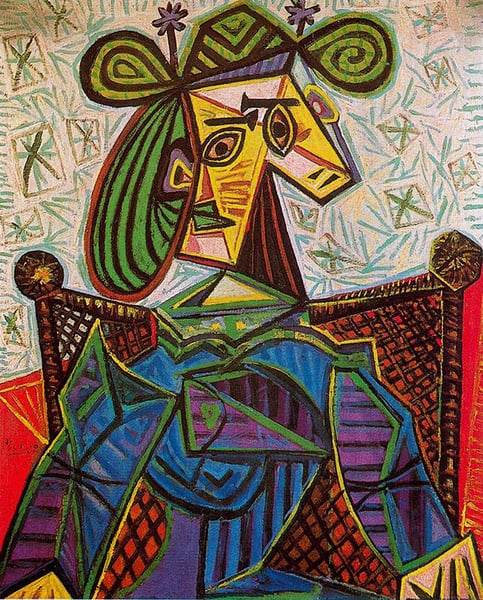
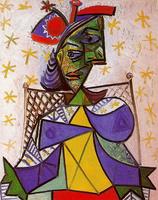
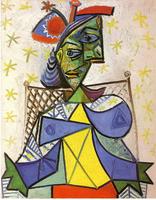
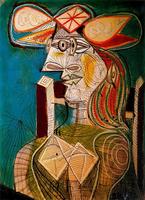
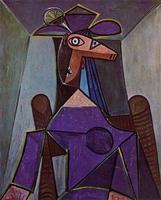
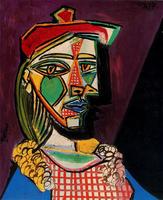
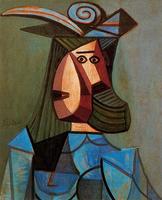
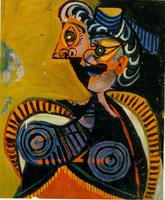
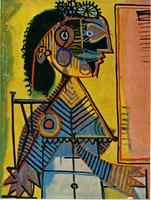
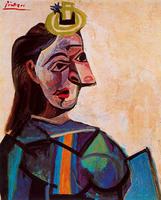
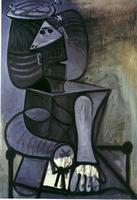
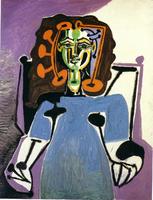
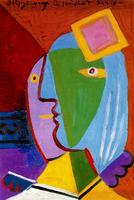
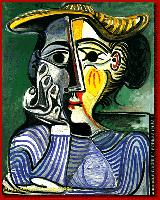
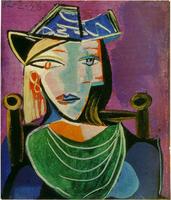
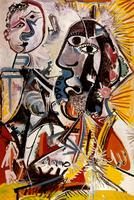
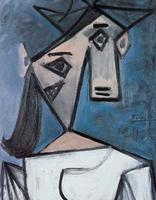
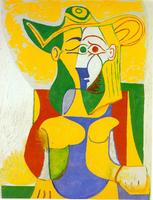
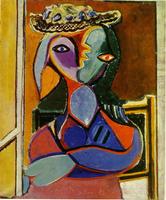
This portrait, Woman sitting in an armchair, belongs to Pablo Picasso’s Neoclassicist & Surrealist Period, a transitional phase in which he fused the monumental, simplified forms of his earlier neoclassical works with the dreamlike distortions and psychological intensity of Surrealism. The painting’s significance lies in how it exemplifies this synthesis: while the subject—a woman in an armchair—recalls traditional portraiture, the Surrealist style radically reconfigures the figure, transforming a conventional genre into a vehicle for exploring the subconscious. Picasso’s treatment of the sitter, typical of his Surrealist output, prioritizes emotional and symbolic resonance over realistic representation, making the work a key example of his departure from classical idealism toward the irrational, poetic imagination that defined the Surrealist movement.