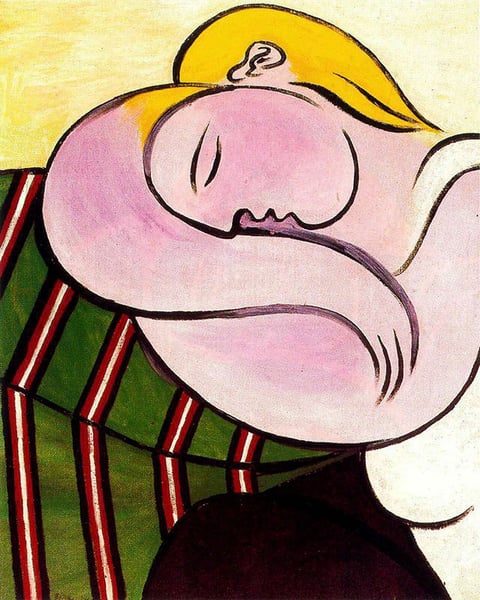
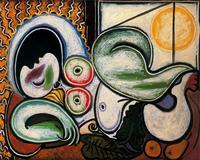
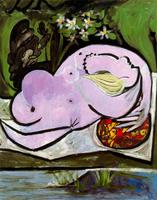
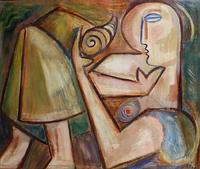
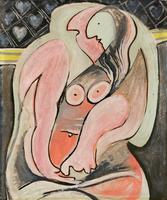
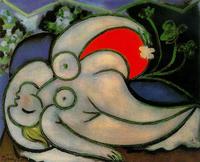
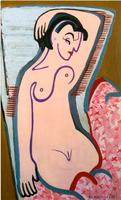
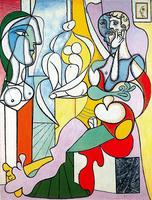
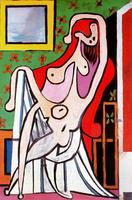
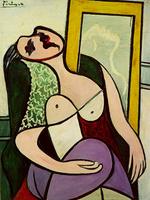
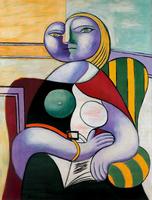
Based solely on the provided facts, the significance of Pablo Picasso's Woman with yellow hair lies in its dual allegiance to both the Neoclassicist and Surrealist impulses of its period. While categorized under Surrealism, the work belongs to Picasso's transitional phase (c. 1920s–1930s), where he merged the structured, monumental forms of Neoclassicism with the irrational, dreamlike distortions of Surrealism. The "yellow hair" is likely a Surrealist device—a jarring, unnatural color that disrupts realistic expectation, yet the genre-painting format (typically depicting scenes of everyday life) anchors the figure in a recognizable context. This tension between classical order and surrealist disruption makes the work a key example of Picasso's ability to synthesize opposing movements, challenging the viewer’s perception of the female form while retaining a sense of compositional stability.