Expert analysis of Titian’s Giacomo Doria
Style: High Renaissance · Genre: portrait
Expert Analysis: "Giacomo Doria" by Titian
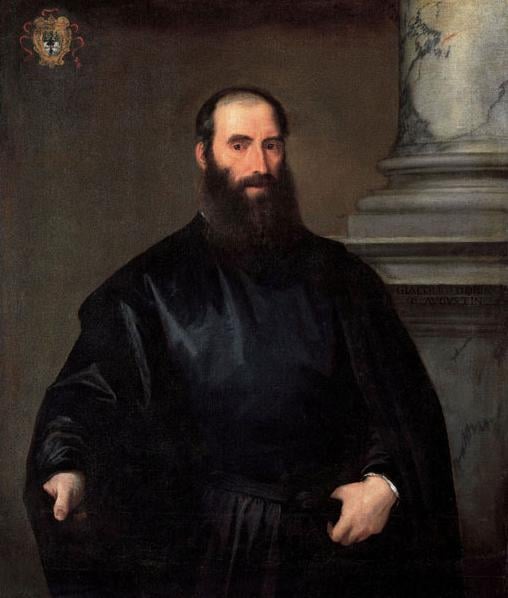
Titian’s Portrait of Giacomo Doria stands as a quintessential example of High Renaissance portraiture, demonstrating the artist’s unparalleled ability to fuse psychological depth with technical mastery. Painted during a period when Titian was the dominant portraitist of European nobility, this work captures the Genoese admiral and statesman not merely as a likeness but as a living presence—confident, watchful, and poised.
Significance within the High Renaissance style:
- Psychological realism: Titian elevates the portrait beyond mere documentation. Doria’s penetrating gaze, the slight tension in his jaw, and the nuanced rendering of his hands all convey a man of action and intellect. This internalized narrative was revolutionary, shifting portraiture from idealized representation to a window into the sitter’s character.
- Mastery of color and light: Titian’s signature colorito—the rich, warm palette and subtle transitions of tone—imbues the flesh with lifelike warmth. The deep blacks of Doria’s costume contrast with the luminous skin, while the soft sfumato around the eyes and beard creates a sense of atmospheric depth. This handling of oil paint influenced generations, from Rubens to Velázquez.
- Composition and presence: The three-quarter pose, direct engagement with the viewer, and stark background focus attention solely on Doria’s face and hands—the twin centers of identity and gesture. The asymmetrical collar and dark fur-lined robe add texture without distracting, a hallmark of Titian’s refined formal economy.
Why this portrait matters:
Titian’s Giacomo Doria exemplifies the High Renaissance ideal of terribilità—a commanding, even formidable presence—tempered by human vulnerability. It also reflects the growing importance of individual achievement in Renaissance society: Doria, a prominent admiral and merchant, is portrayed not as a remote prince but as a man whose authority stems from his own capabilities. The painting thus bridges the civic humanism of the early Renaissance and the more aristocratic, psychologically complex portraiture of the later 16th century. In Titian’s hands, the portrait becomes a mirror of both the sitter’s soul and the cultural moment—a feat that secures this work’s lasting significance in the canon of Western art.
Museum / Gallery
Visually similar
20 works with related composition and palette
Portrait of Benedetto Varchi
Titian
Portrait of Nicolaus Padavinus
Tintoretto
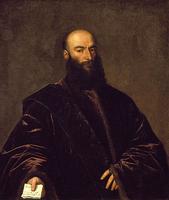
Portrait of Jacopo (Giacomo) Dolfin
Titian
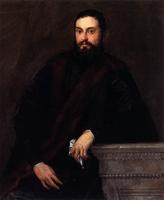
Gentleman in Black
Paolo Veronese
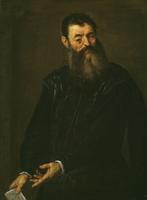
Portrait of a Gentleman
Palma il Giovane
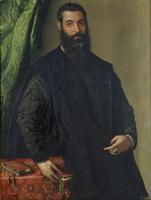
Portrait of a Man
Francesco de' Rossi (Francesco Salviati), "Cecchino"
Portrait of a man
Tintoretto
Portrait of Giovanni Paolo Cornaro
Tintoretto
Portrait of Jacopo Sansovino
Tintoretto
Self-portrait
Giorgio Vasari
Man from the Santacroce Family
Francesco de' Rossi (Francesco Salviati), "Cecchino"
Portrait of a Painter with a Palm Leaf
Titian
Portrait of Niccolò Ardinghelli
Jacopo Pontormo
Young Man of the Renialme Family
Tintoretto
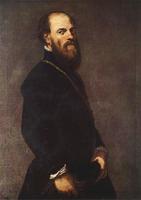
Man with Gold Chain
Tintoretto
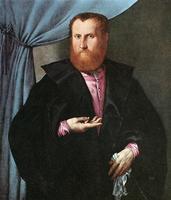
Portrait of a Man in Black Silk Cloak
Lorenzo Lotto
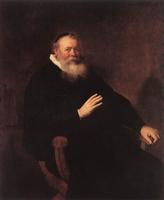
Portrait of Eleazer Swalmius
Rembrandt
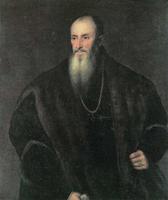
Portrait of Nicolas Perrenot of Granvelle
Titian
Lorenzo Soranzo
Tintoretto
Portrait of Antonio Anselmi
Titian