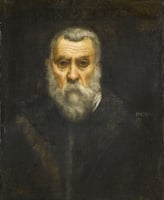
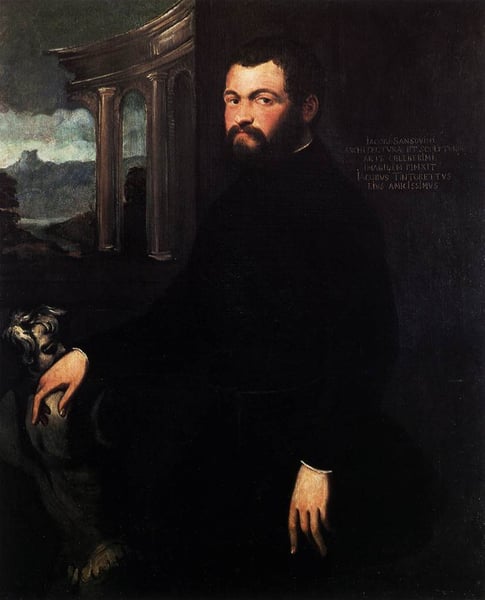
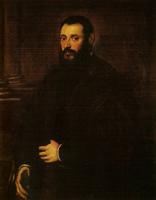
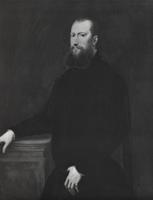
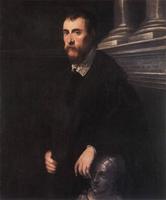
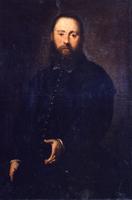
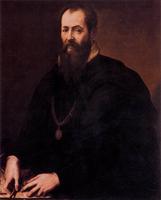
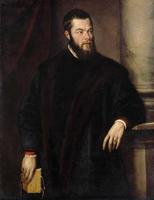
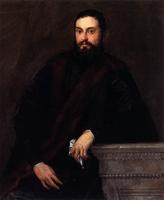
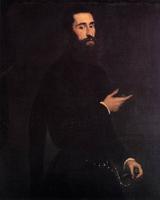
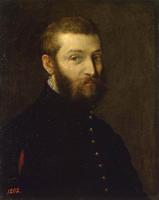
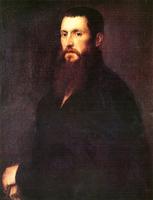
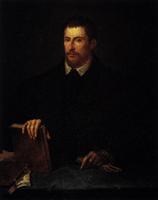
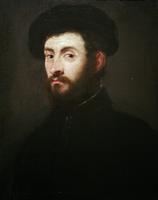
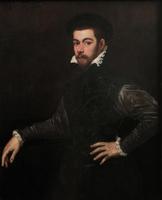
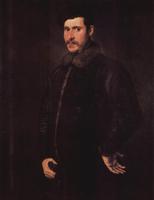
The "Portrait of Jacopo Sansovino" by Tintoretto is a striking example of Mannerist portraiture from the Late Renaissance. Executed in the Mannerist style, the work departs from the harmonious naturalism of the High Renaissance, instead emphasizing elegance, artificial sophistication, and psychological intensity—hallmarks of the period. Tintoretto’s portrait captures Sansovino not merely as a sitter but as an individual of intellectual and artistic stature, using elongated proportions, a dynamic pose, and dramatic chiaroscuro to convey a sense of nervous energy and inner life. The painting’s significance lies in its embodiment of Mannerist ideals: it prioritizes stylized grace and expressive distortion over idealized balance, reflecting the era’s fascination with complexity and virtuosity. As a portrait of a fellow artist (Sansovino was a renowned sculptor and architect), it also underscores Tintoretto’s ability to merge realistic observation with the heightened, almost theatrical sensibility that defines Mannerism.