Analisi esperta di Portrait of Don Fernando Alvarez of Toledo, Grand Duke of Alba di Titian
Stile: High Renaissance · Genere: portrait
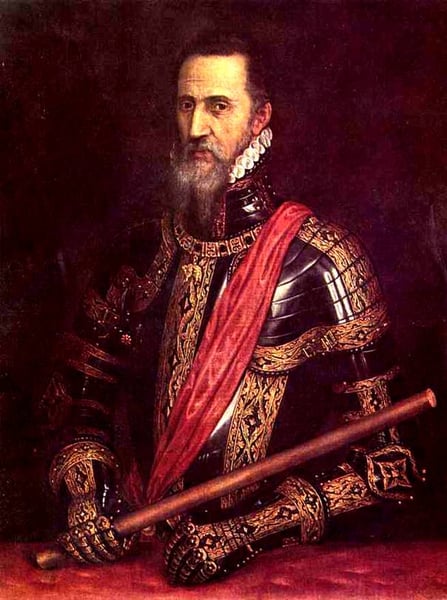
Artwork Analysis: Portrait of Don Fernando Alvarez of Toledo, Grand Duke of Alba by Titian
Style and Period Significance As a masterpiece of the High Renaissance, this portrait exemplifies the era’s shift from idealized, static representation to a more naturalistic and psychologically penetrating approach. Titian, the foremost painter of the Venetian school, brought a uniquely atmospheric sensibility to High Renaissance portraiture—prioritizing rich color, subtle gradations of light, and a sense of living presence that distinguishes his work from the more linear, sculptural style of his Florentine and Roman contemporaries.
Genre and Subject In the genre of the portrait, Titian transcends mere likeness to create a compelling study of power and character. Don Fernando Alvarez de Toledo, the formidable Grand Duke of Alba, is depicted not as a remote icon but as a flesh‑and‑blood figure of authority. The composition emphasizes his armored form and stern gaze, suggesting both martial command and intellectual resolve. This fusion of individual personality with public role is a hallmark of High Renaissance portraiture, and Titian achieves it through a masterful handling of texture—the cold gleam of metal, the warmth of flesh, and the subtle interplay of shadows that model the sitter’s face with unprecedented realism.
What Makes the Work Significant The portrait’s significance lies in its synthesis of psychological depth and technical virtuosity. Titian’s use of sfumato and loose, expressive brushwork creates a sense of immediacy and inner life, while the restrained palette and balanced composition confer the dignity expected of a high‑ranking nobleman. At the same time, the work captures the tension of the era: the Duke was a controversial figure, and Titian does not flinch from showing the hardness behind the official image. This willingness to convey complexity—rather than mere flattery—raises the portrait from a courtly commission to a timeless meditation on authority and human nature. In the context of the High Renaissance, it stands alongside Titian’s other great portraits as a benchmark for how painting could explore the intersection of power, personality, and artistic innovation.
Visivamente simili
20 opere con composizione e palette affini
Retrato de Francisco II della Rovere
Federico Barocci
Charles V in Armour
Peter Paul Rubens
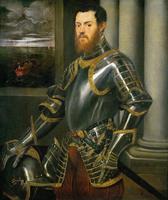
Portrait of a Man in a Gold Decorated Suit of Armour
Tintoretto
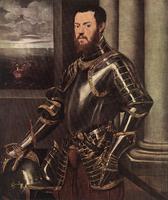
Man in Armour
Tintoretto
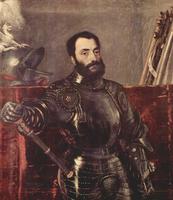
Portrait of Francesco Maria della Rovere
Titian
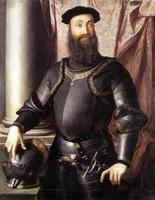
Portrait of Stefano IV Colonna
Agnolo Bronzino
Portrait of Alfonso d`Avalos , in Armor with a Page
Titian
Philipp II, as Prince
Titian
Portrait of a Young General
Anthony van Dyck
Ritratto Di Carlo Emanuele Teodoro Trivulzio
Giulio Cesare Procaccini
Retrato De Jean De Croÿ, Conde De Solre
Juan van der Hamen
Portrait of Charles I King of England
Anthony van Dyck
Emperor Maximilian I
Peter Paul Rubens
Francesco I De Medici
Alessandro Allori
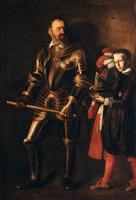
Portrait of Alof de Wignacourt and his Page
Caravaggio
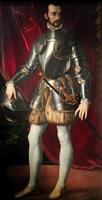
Portrait of Francesco I De' Medici
Alessandro Allori
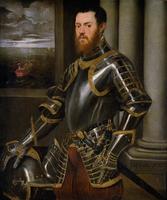
Young man in a gold decorated suit of armour
Tintoretto
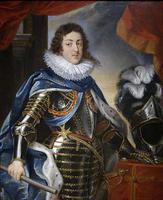
Louis XIII
Peter Paul Rubens
Portrait of a Man in Armor
Anthony van Dyck
Portrait of a Member of the Balbi Family
Anthony van Dyck