Analisi esperta di The Doge Niccolo Marcello di Titian
Stile: Mannerism (Late Renaissance) · Genere: portrait
Expert Analysis: "The Doge Niccolo Marcello" by Titian
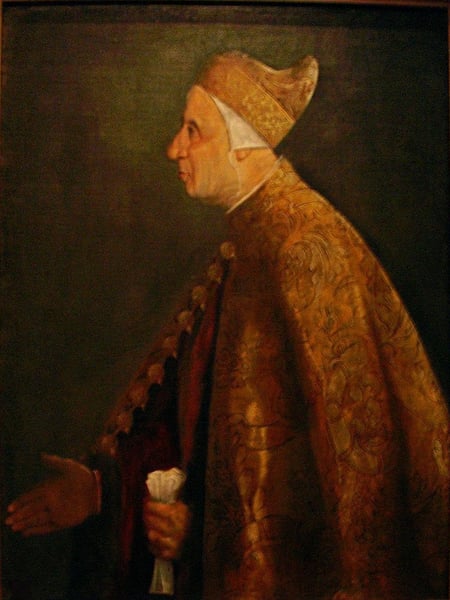
This portrait, executed during Titian’s engagement with Mannerism (Late Renaissance), exemplifies the shift from High Renaissance naturalism toward a more refined, intellectually charged representation. As a portrait of a Venetian doge, the work carries both political and artistic significance.
Significance within Style and Period:
-
Mannerist Intensification of Status: Titian elevates the doge beyond mere likeness, imbuing him with an almost hieratic dignity through compressed spatial composition and a slightly elongated, formal silhouette. The figure’s posture and the controlled, asymmetrical drapery reflect Mannerism’s preference for elegance over simple verisimilitude.
-
Psychological Depth through Technique: Despite the stylized form, Titian’s masterful handling of oil paint—soft, broken brushstrokes in the flesh and rich, velvety blacks in the robe—creates a palpable sense of age, authority, and introspection. The doge’s gaze, direct yet slightly remote, suggests the burdens of office, a hallmark of Titian’s revolutionary approach to interiority in portraiture.
-
Color as Emblem: The warm, resonant reds and golds of the ducal mantle are not merely decorative; they anchor the figure in Venetian tradition and wealth. Titian, though engaging Mannerist abstraction, never abandons his signature colorito, using hue and texture to convey both material splendor and the transient flesh beneath.
-
Historical Posthumous Portrait: Painted well after the doge’s death (Marcello reigned 1473–1474), the work functions as a memorial idealized image. Titian merges Mannerist artifice with a convincing human presence, making the portrait a meditative fusion of memory, power, and aesthetic refinement.
What Makes It Significant: This portrait stands as a bridge between High Renaissance naturalism and the more self-conscious, stylized tendencies of Late Mannerism. It demonstrates how Titian—despite working within a courtly, formulaic genre—could infuse a portrait with profound psychological resonance while satisfying Mannerism’s demand for grace, abstraction, and symbolic grandeur. The work remains a testament to Venetian portraiture’s ability to convey both political authority and human vulnerability.
Visivamente simili
20 opere con composizione e palette affini
Marco Barbarigo
Domenico Tintoretto
Portrait of Doge Andrea Gritti
Titian
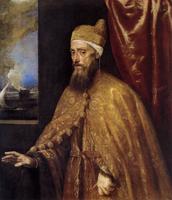
Portrait of the Doge Francesco Venier
Titian
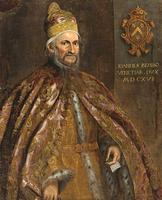
Portrait of the Doge Giovanni Bembo
Tintoretto
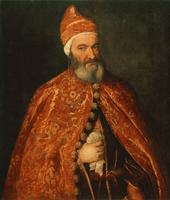
Portrait of Doge Marcantonio Trevisani
Titian
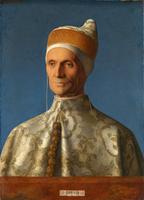
Leonardo Loredan
Giovanni Bellini
Cardinal Alessandro Farnese
Titian
Portrait of Cardinal Alessandro Farnese
Titian
Portrait of a condottiere
Giovanni Bellini
Portrait of Pope Nicholas V
Cristofano dell'Altissimo
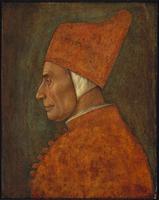
Portrait of a Doge, Probably Pasquale Malipiero
Gentile Bellini
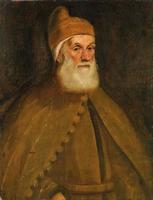
Portrait of Doge Girolamo Priuli
Tintoretto
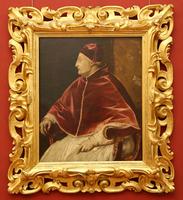
Portrait of Pope Sixtus IV
Titian
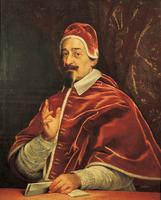
Pope Alexander VII
Giovanni Battista Gaulli
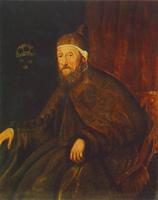
Portrait of Doge Pietro Loredano
Tintoretto
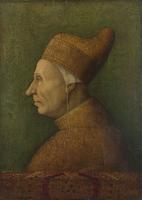
Portrait of the Doge of Venice Nicolò Marcello
Gentile Bellini
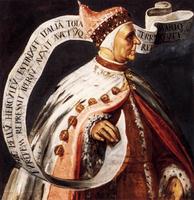
Portrait of Giovanni Mocenigo
Domenico Tintoretto
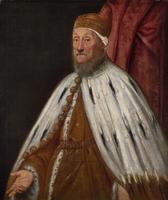
Doge Pietro Loredano
Tintoretto
Sir Archibald Macdonald
George Romney
Doge Marino Morosini
Palma il Giovane