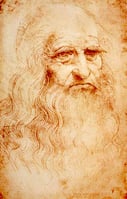
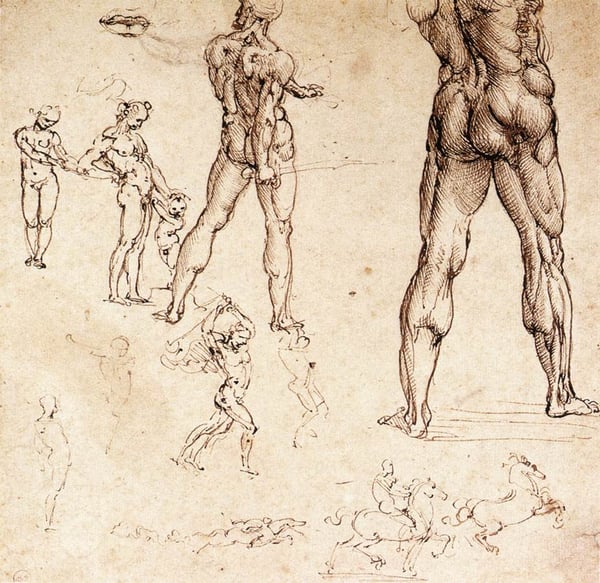
Expertenanalyse zu Leonardo da Vincis Anatomical studies
Stil: High Renaissance · Genre: sketch and study
Expert Analysis of Leonardo da Vinci’s Anatomical Studies
As a defining work of the High Renaissance, Leonardo da Vinci's Anatomical Studies (sketch and study) embodies the period's profound synthesis of empirical observation and artistic mastery.
Significance within the High Renaissance Style:
The High Renaissance is characterized by an unwavering commitment to naturalism, humanism, and the pursuit of ideal beauty grounded in reality. Leonardo’s anatomical sketches are a pinnacle of this ethos: they transcend mere artistic preparation and become scientific inquiries. The genre of sketch and study is not incidental—it is the very arena where the High Renaissance’s core values (rigorous observation, proportional harmony, and the fusion of art with science) are most directly tested and refined.
What makes this work significant:
- Method as Masterpiece: Unlike finished paintings that may idealize the human form, Leonardo’s studies capture the body with unflinching precision—muscles, bones, and organs rendered with a draftsman’s hand and an anatomist’s eye. This elevates the sketch from a preparatory tool to an autonomous work of intellectual and artistic value.
- Proto-Scientific Humanism: The work exemplifies the High Renaissance belief that understanding nature (here, the human body) is essential to representing beauty. Leonardo’s cross-sectional views and layered drawings anticipate modern medical illustration, yet they are composed with the same graceful line and chiaroscuro that define his painted masterpieces.
- Legacy of Inquiry: As a genre piece, it underscores the Renaissance artist as a universal thinker—an uomo universale—for whom drawing was both a visual record and a tool for discovery. The sketch’s unfinished, exploratory quality is not a flaw but a testament to the relentless curiosity that defines the High Renaissance at its zenith.
In sum, Anatomical Studies is significant because it captures the very engine of High Renaissance art: the belief that truth—whether of the soul or the sinew—must be seen, studied, and drawn before it can be sublime.
Museum / Gallery
Visuell ähnlich
20 Werke mit ähnlicher Komposition und Farbpalette
L'Ecorche and Borghese Gladiator
Vincent van Gogh
Nude Studies
Bartolomeo Passerotti
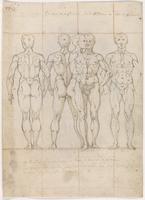
Codex Huygens Fol. 33
Carlo Urbino
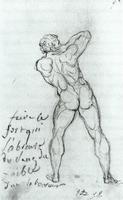
Study after Michelangelo
Jacques-Louis David
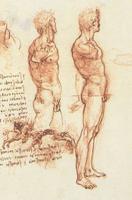
The anatomy of a male nude and a battle scene
Leonardo da Vinci
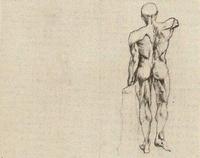
L'Ecorche
Vincent van Gogh
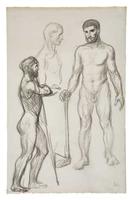
Etude des Hommes
Theophile Steinlen
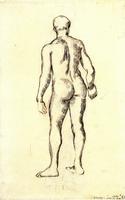
Idol
Vincent van Gogh
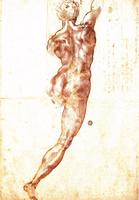
Study to "Battle of Cascina"
Michelangelo
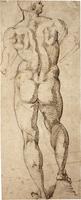
Male Nude
Bartolomeo Passerotti
Idol and Sketches of Venus
Vincent van Gogh
Drawing 4
John Singer Sargent
Study for Haman
Michelangelo
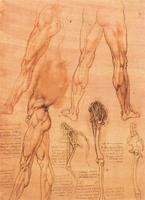
Studies of legs of man and the leg of a horse
Leonardo da Vinci
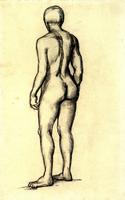
Idol
Vincent van Gogh
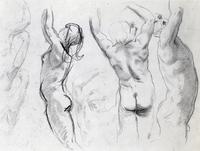
Studies of a Nude Youth
John Singer Sargent
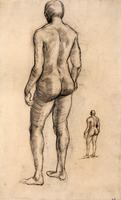
Idol
Vincent van Gogh
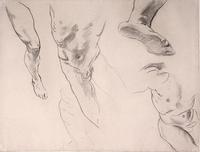
Figure studies of a male youth
John Singer Sargent
The Model
Kuzma Petrov-Vodkin
Female Nude
Albrecht Durer