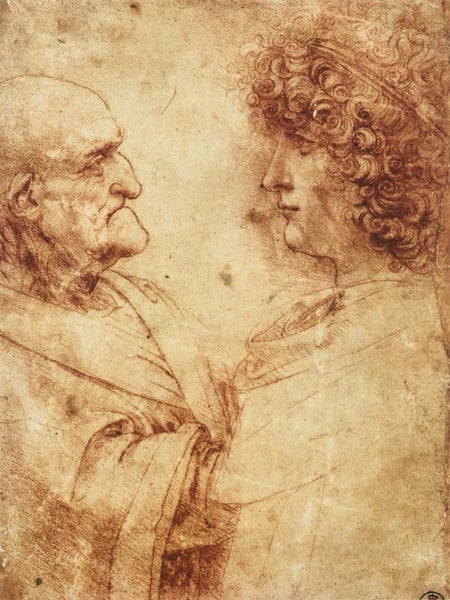
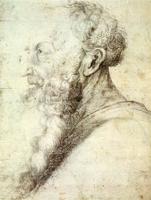
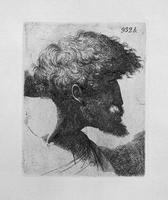
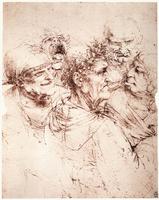
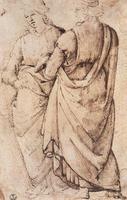
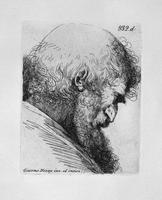
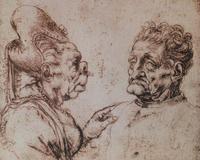
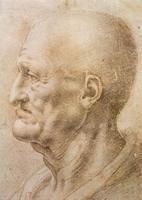
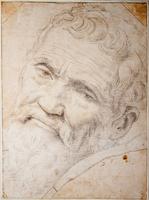
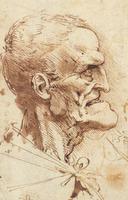
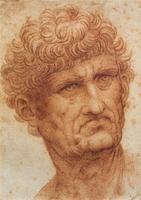
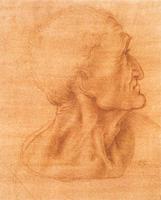
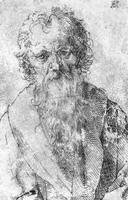
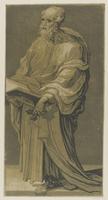
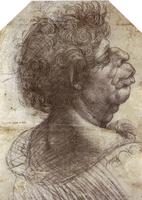
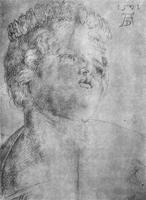
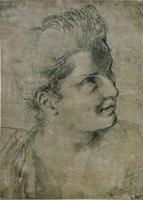
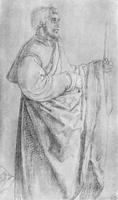
This work, a portrait by Leonardo da Vinci in the High Renaissance style, captures a moment of profound psychological contrast. As a High Renaissance portrait, it transcends mere likeness to explore universal human themes—here, the juxtaposition of age and youth. The pairing of an old man and a youth is significant within the period’s emphasis on humanist inquiry, allowing Leonardo to study the effects of time on the face and the expression of different life stages. The work’s significance lies in its demonstration of the High Renaissance ideal: achieving naturalism not through static replication but through dynamic human observation. Leonardo’s mastery of subtle tonal transitions (a hallmark of his approach) would have been essential to convey the weathered features of the old man against the smooth, unformed visage of the youth, making this drawing a concentrated study of life’s transience and the enduring humanity that defines the era’s portraiture.