Leonardo da Vinci の Study of a child の専門的な分析
スタイル:High Renaissance · ジャンル:sketch and study
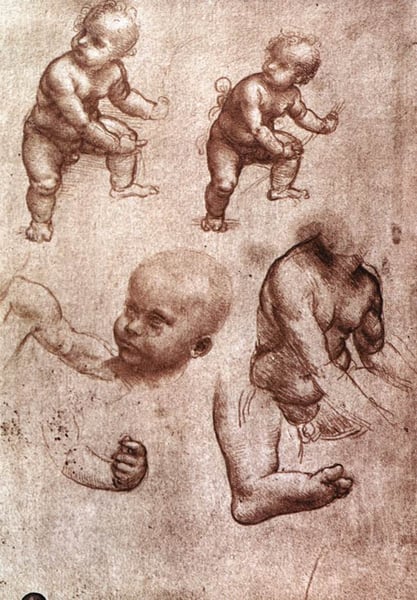
Expert Analysis: Study of a Child by Leonardo da Vinci
Style/Period Context (High Renaissance)
As a quintessential High Renaissance work, Leonardo’s Study of a Child embodies the era’s defining obsession with naturalism, humanistic inquiry, and the fusion of art with science. Created during a period when artists sought to elevate painting to a liberal art, this sketch demonstrates Leonardo’s unparalleled ability to capture life’s fleeting essence through rigorous observation—a hallmark of the High Renaissance’s break from rigid medieval formulas.
Genre Significance (Sketch and Study)
As a sketch and study, this work is not a finished masterpiece but a window into Leonardo’s creative and intellectual process. It reveals his method of using rapid, exploratory lines (often in silverpoint or chalk) to record anatomy, proportion, and movement. Such studies were critical to his larger compositions, yet they stand alone as testaments to his belief that art must be rooted in empirical truth. Here, the child’s soft, rounded features and delicate curls are rendered with a tenderness that anticipates his later, more famous figures like the Virgin of the Rocks or St. Anne.
What Makes It Significant
-
Anatomical and Emotional Precision: Leonardo’s study of children was rare for its time; most Renaissance artists focused on adults or idealized infants. By capturing the unique bone structure, soft tissue, and unguarded expression of a child, he demonstrates a scientific curiosity that foreshadows modern pediatric anatomy. The gentle tilt of the head and the slightly parted lips suggest a moment of quiet attention, infusing a simple study with profound humanity.
-
Mastery of Light and Sfumato: Even in this preparatory drawing, Leonardo employs sfumato (the subtle blending of tones) to create a lifelike softness around the eyes and cheeks. The lack of harsh outlines—a trait later perfected in the Mona Lisa—allows the child’s form to emerge from the paper as if breathing. This technique elevates the sketch beyond mere draftsmanship to a poetic meditation on the transience of childhood.
-
Influence on High Renaissance Ideals: The work epitomizes the High Renaissance belief that the divine resides in the natural world. By studying a real child rather than a mythological or religious symbol, Leonardo asserts that human experience—even in its most ordinary form—is worthy of profound artistic devotion. This study ultimately contributed to a broader cultural shift toward valuing individual human life and development.
Conclusion
Study of a Child is significant not as a finished artwork but as a luminous artifact of Leonardo’s genius. It captures the High Renaissance at its most introspective: where line becomes life, and a simple sketch holds the power to reveal the universal in the particular.
Museum / Gallery
視覚的に類似
構図やパレットが近い作品 20 件
Putti Dancing and Making Music
Albrecht Durer
Child Studies
Theodor Leopold Weller
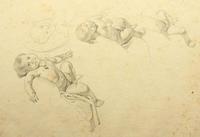
Studies with lying child
Theodor Leopold Weller
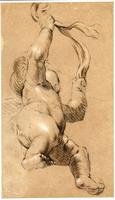
Sketch of Putto Holding a Sash in Both Hands, Seen from Below
Joshua Reynolds
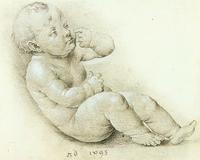
Study of the Christ Child
Albrecht Durer
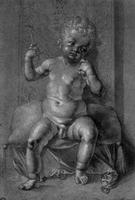
Seated Nude Child
Albrecht Durer
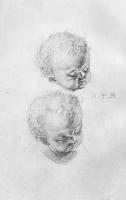
Study sheets with children's heads
Albrecht Durer
Study for "The Last Judgement"
Michelangelo
Cherub, half-length, by Guercino
Giovanni Battista Piranesi
Christ boy
Albrecht Durer
Study for the Madonna with the Fruit Bowl
Leonardo da Vinci
Three children's heads
Albrecht Durer
Various studies
Michelangelo
Study for Adam
Raphael
Child's head
Albrecht Durer
Study for a "Holy Family with the Infant St.John"
Michelangelo
Weeping Angel boy
Albrecht Durer
Adam and Eve at Work
Jacopo Pontormo
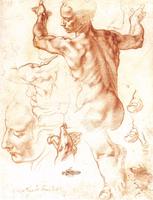
Study to The Libyan Sibyl
Michelangelo
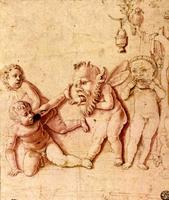
Children playing with masks
Andrea Mantegna