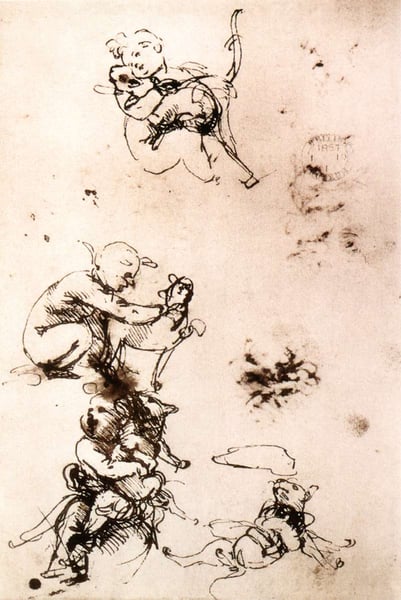
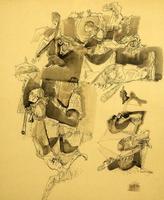
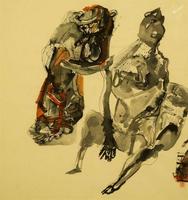
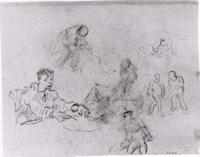
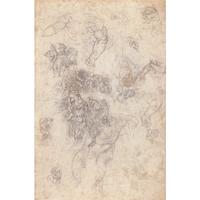
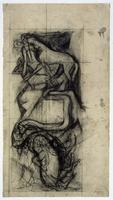
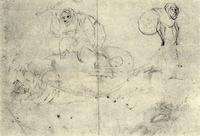
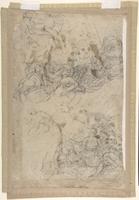
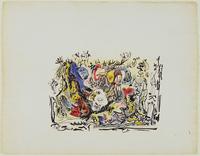
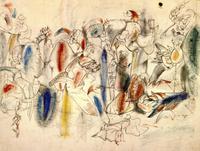
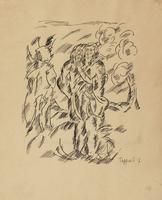
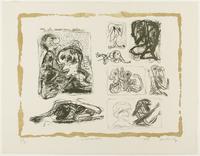
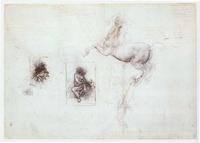
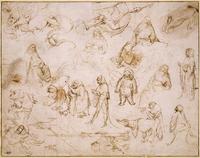
This artwork, "Study of a child with a cat" by Leonardo da Vinci, is a quintessential example of the Early Renaissance emphasis on naturalism and empirical observation. As a sketch and study, it holds significance within this period for its intimate, unposed glimpse into Leonardo’s working method—a direct, unvarnished investigation of the human figure and animal form in dynamic interaction.
The work is notable for demonstrating the Early Renaissance shift from static, symbolic representation to lifelike, fluid movement. Here, Leonardo captures the spontaneous tension between a child and a cat, using swift, expressive lines to suggest both the softness of flesh and the coiled energy of the animal. This study not only reveals his mastery of anatomy and gesture but also prefigures the more fully realized compositions of the High Renaissance. Within its genre, it showcases the artist’s relentless drive to understand nature through direct observation, making it a valuable document of the period’s intellectual and artistic curiosity.