Analisi esperta di Study sheet di Leonardo da Vinci
Stile: Early Renaissance · Genere: sketch and study
Expert Analysis: "Study Sheet" by Leonardo da Vinci
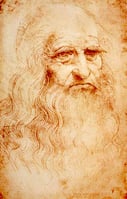
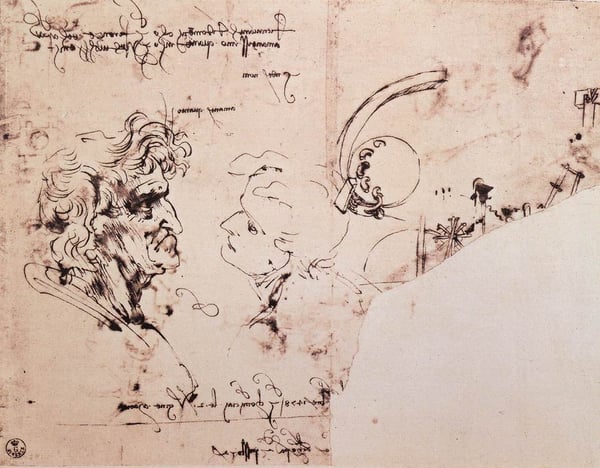
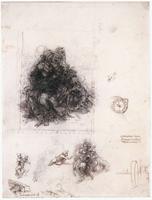
As an early Renaissance sketch and study, Leonardo da Vinci’s Study Sheet stands as a quintessential example of the period’s revolutionary shift toward empirical observation and intellectual curiosity. Unlike finished paintings intended for public display, this work belongs to a private, investigative genre—the preparatory study—which reveals the artist’s relentless pursuit of knowledge, anatomy, and dynamic natural forms.
Significance within the Early Renaissance Context
The Early Renaissance (c. 1400–1490s) is defined by a renewed emphasis on naturalism, humanism, and the integration of scientific principles into art. Leonardo’s study sheets epitomize these ideals. Here, he does not merely copy nature; he dissects it. The sketch likely includes anatomical studies, drapery folds, and mechanical or botanical elements—all typical of his method. Each line is a question, a hypothesis about how light falls on muscle or how tension shapes a tendon.
Why This Work Matters
-
Cross-disciplinary methodology: Leonardo treated drawing as a tool for investigation. Study Sheet blurs the boundaries between art and science, embodying the Renaissance ideal of the uomo universale (universal man). His annotations (if present) and rapid, multiple studies on one page demonstrate a mind cataloging the world’s structures.
-
Innovation in sketch technique: Unlike medieval pattern books, Leonardo’s studies are not formulaic. They capture fleeting poses, subtle shifts in weight, and the interplay of chiaroscuro—even in preliminary form. This sheet likely showcases his sfumato approach in embryo, with soft transitions that anticipate his painted masterpieces.
-
Insight into creative process: As a study, this work offers unprecedented access to Leonardo’s thinking. The juxtaposition of a hand, a face, and a mechanical device on the same page reveals how he connected micro-observations to macro-principles, from human proportion to engineering.
-
Legacy for future generations: Such sheets became models for later Renaissance and Baroque artists, proving that a sketch could be as profound as a finished altarpiece. They also preserved Leonardo’s anatomical research long before formal medical illustration existed.
In summary, Study Sheet is significant not for its polish, but for its raw intellectual energy. It captures the moment of discovery—the very essence of the Early Renaissance ambition to understand and replicate the divine harmony of nature through art.
Museum / Gallery
Visivamente simili
20 opere con composizione e palette affini
Study for the Deluge
Jacopo Pontormo
Study of the effect of light on a profile head (facsimile)
Leonardo da Vinci
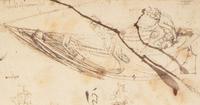
Designs for a Boat
Leonardo da Vinci
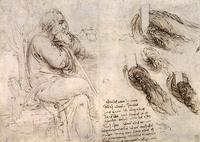
A seated man, and studies and notes on the movement of water
Leonardo da Vinci
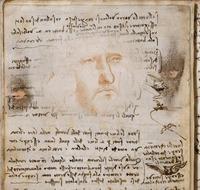
Self portrait on the Flight of Birds Codex
Leonardo da Vinci
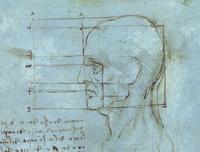
The proportions of the head
Leonardo da Vinci
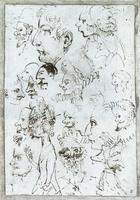
Sheet of caricatures
Annibale Carracci
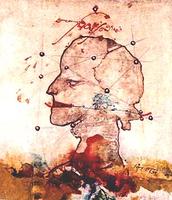
Nemesius Hals
Modest Cuixart
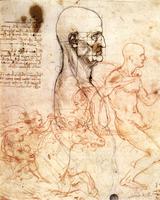
Profile of a man and study of two riders
Leonardo da Vinci
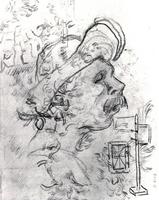
Head of a Man with a Hat, a Perspective Frame, and Other Sketches
Vincent van Gogh
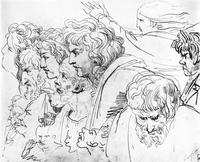
Sketches of the heads
Orest Kiprensky
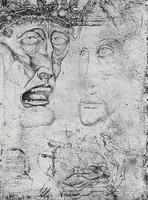
PASSIO
Ernst Fuchs
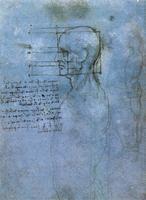
Study of proportion
Leonardo da Vinci
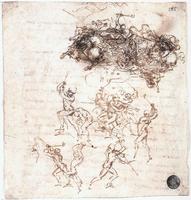
Study of battles on horseback and on foot
Leonardo da Vinci
Memory of the Child Woman
Salvador Dali
Codex Huygens Fol. 54
Carlo Urbino
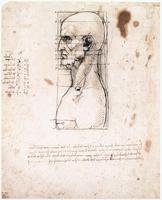
Bust of a man in profile with measurements and notes
Leonardo da Vinci
The Art of Cooking
Carlo Urbino
Studies for Four Figures
Palma il Giovane
Study for the "Burlington House Cartoon" (The Virgin and Child with St. Anne and St. John the Baptist)
Leonardo da Vinci