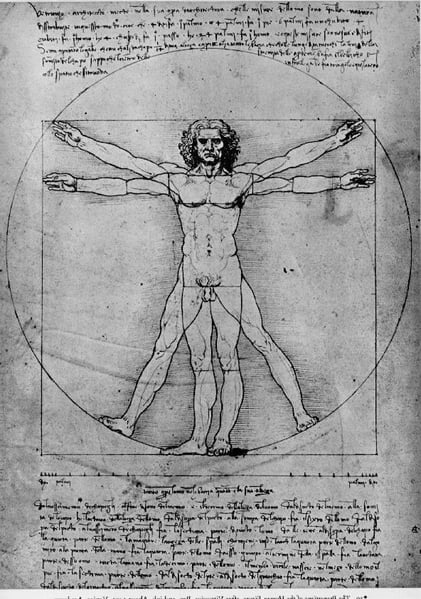
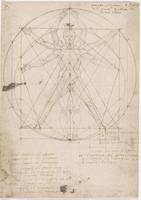
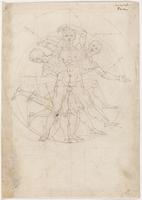
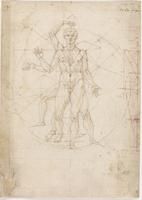
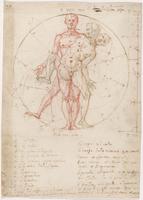
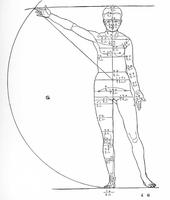
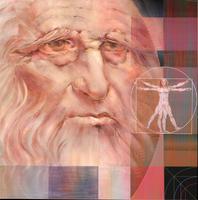
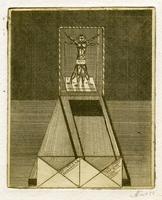
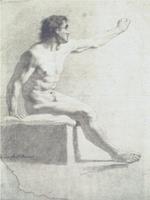
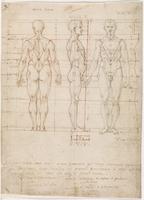
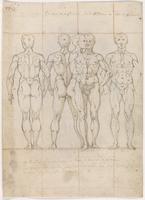
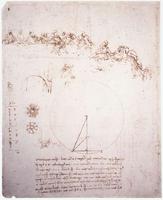
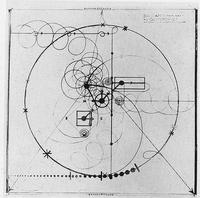
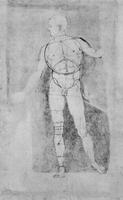
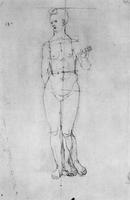
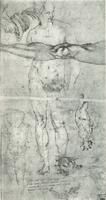
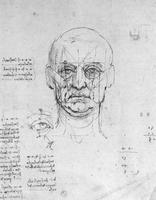
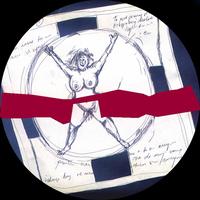
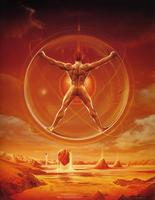
Leonardo da Vinci’s The Proportions of the Human Figure (The Vitruvian Man) is a seminal work of the High Renaissance in the design genre. Its primary significance lies in its perfect synthesis of art and science—a hallmark of the period. As a design drawing, it visually articulates the classical architectural theories of Vitruvius, demonstrating how the ideal human body can be inscribed within both a circle and a square. This dual geometric alignment reflects the High Renaissance pursuit of harmony, proportion, and universal order, making the work a definitive statement of humanist ideals and a lasting icon of measured beauty.