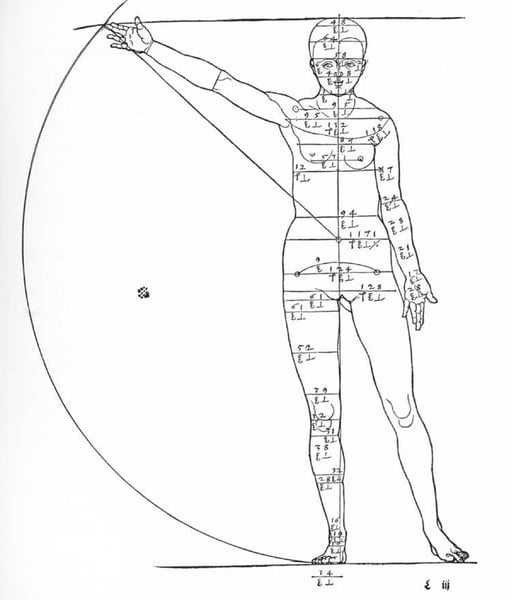
Figure of Woman Shown in Motion
Details
Expert analysis of Albrecht Durer’s Figure of Woman Shown in Motion
Style: Northern Renaissance · Genre: sketch and study
Expert Analysis: "Figure of Woman Shown in Motion" by Albrecht Dürer
Albrecht Dürer's "Figure of Woman Shown in Motion" is a compelling example of the Northern Renaissance emphasis on empirical observation and the study of human anatomy. As a sketch and study, this work captures a moment of artistic experimentation rather than a finished composition, revealing Dürer’s rigorous approach to capturing the subtleties of the human form in action.
Significance within its Style and Genre:
- Northern Renaissance Context: Dürer was deeply influenced by Italian Renaissance ideals of proportion and naturalism, but he adapted them with a distinct Northern European precision. This sketch demonstrates his commitment to documenting observed reality—here, the transient posture of a woman in motion—with meticulous linework and an attention to weight, balance, and dynamic tension.
- Role of the Sketch/Study: In the Northern Renaissance, preparatory studies were essential for refining complex compositions. This work stands out because it prioritizes movement itself as a subject, a relatively uncommon focus in an era when static, posed figures were more typical. Dürer’s choice to isolate a single figure in mid-gesture prefigures the Renaissance interest in capturing life’s fleeting moments, bridging the gap between medieval schematic art and later Baroque dynamism.
- Artistic Process: The visible hatching and structural lines suggest Dürer was analyzing how the body shifts weight while turning—a study of biomechanics as much as aesthetics. This analytical approach underscores his role as a pioneer in merging artistry with scientific inquiry, reflecting the Northern Renaissance’s broader humanist curiosity.
Why It Matters:
This sketch is not merely a rough draft but a testament to Dürer’s belief that even the most transient natural motion contains underlying order. By elevating a study to an autonomous work, he asserted that the process of looking and understanding—not just the finished product—holds artistic value. It remains significant as an early, sophisticated attempt to document motion, foreshadowing later studies of kinetics in both art and science.
Museum / Gallery
Visually similar
20 works with related composition and palette
Codex Huygens Fol. 7
Carlo Urbino
Codex Huygens Fol. 3
Carlo Urbino
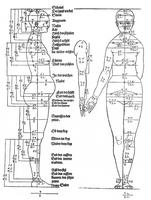
Studies on the Proportions of the Female Body
Albrecht Durer
Codex Huygens Fol.14
Carlo Urbino
Codex Huygens Fol. 27
Carlo Urbino
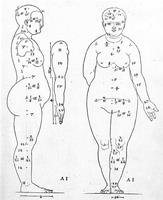
Side and frontal view of the female head
Albrecht Durer
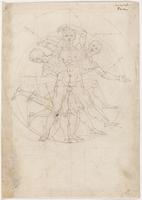
Codex Huygens Fol. 6
Carlo Urbino
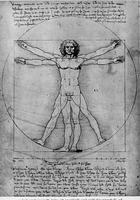
The proportions of the human figure (The Vitruvian Man)
Leonardo da Vinci
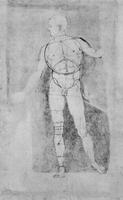
Male Nude (Adam)
Albrecht Durer
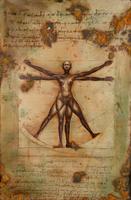
The Virtuous Woman
Harmonia Rosales
Female Nude
Albrecht Durer
Rear view of the female
Albrecht Durer
Codex Huygens Fol. 33
Carlo Urbino
Study on the proportions of head and eyes
Leonardo da Vinci
The Fourth 'Book of Schemes'. Album #1, the First Folder
Valerii Lamakh
Study of proportion
Leonardo da Vinci
Diagram for Gesture Dance
Oskar Schlemmer
The proportions of the head
Leonardo da Vinci
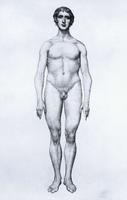
Study of the Human Figure, Anterior View, from 'A Comparative Anatomical Exposition of the Structure of the Human Body with that of a Tiger and a Common Fowl'
George Stubbs
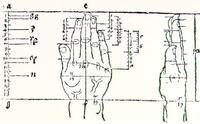
Hand
Albrecht Durer