
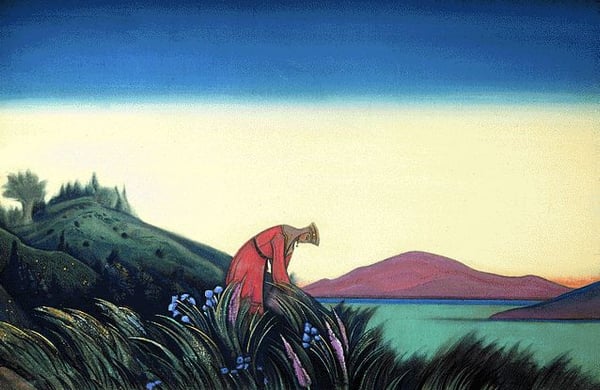
Beneficial herbs (Vasilisa the Wise)
Details
Expertenanalyse zu Nicholas Roerichs Beneficial herbs (Vasilisa the Wise)
Stil: Symbolism · Genre: mythological painting
Expert Analysis of "Beneficial herbs (Vasilisa the Wise)" by Nicholas Roerich
Nicholas Roerich’s Beneficial herbs (Vasilisa the Wise) stands as a quintessential example of Symbolist mythological painting, where the artist transcends literal narrative to evoke spiritual and mystical truths. Roerich, deeply influenced by Theosophy and Russian folklore, uses the figure of Vasilisa the Wise—a legendary heroine from Slavic tradition—as a vessel for universal wisdom. The title itself points to the healing powers of nature, a recurring theme in Symbolism that elevates the natural world to a realm of hidden, sacred knowledge.
Within the Symbolist movement, artists rejected naturalistic depiction in favor of suggestive imagery, aiming to reveal the invisible through color, form, and myth. Roerich achieves this through a deliberate flattening of space and a luminous, almost ethereal palette. The herbs are not mere botanical details but symbolic conduits of life force, aligning with the Symbolist belief in correspondences between the material and the spiritual. Vasilisa, often a figure of magical insight, becomes a mediator between humanity and the earth’s ancient secrets.
What makes this work significant is its synthesis of Slavic mythological identity with Symbolist spirituality. At a time when many Western artists looked to Greco-Roman or Christian sources, Roerich turned to indigenous Russian legends, grounding his mysticism in folklore. This painting anticipates his later, more ambitious series on Shambhala and the Himalayas, yet here the focus remains intimate: the quiet power of a wise woman communing with beneficial herbs. The work exemplifies Symbolism’s core ambition—to move beyond the seen world and into a realm of archetypal meaning—while also celebrating the healing wisdom rooted in the earth.
Museum / Gallery
Visuell ähnlich
20 Werke mit ähnlicher Komposition und Farbpalette
Promenade au bord de la mer (Rencontre des fiancés)
Andre Bauchant
En haut de la colline
Camille Bombois
Saint Pantaleon the Healer
Nicholas Roerich
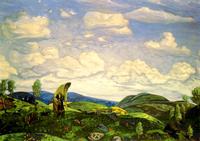
St. Panteleimon the Healer
Nicholas Roerich
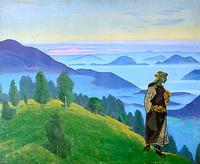
Daughter of viking
Nicholas Roerich
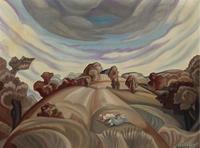
Lovers in the field
Serge Sudeikin
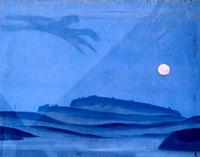
Night rider
Nicholas Roerich
Mountain
Albert Bloch
Shepherd in the Valley of Chateauneuf
Paul Serusier
St. Panteleimon the Healer
Nicholas Roerich
The Walk in the Forest
Henri Rousseau
L'attesa
Carlo Carra
Shepherd
Eugeniusz Zak
Saint Pantaleon the Healer
Nicholas Roerich
Rising of the moon
Wassily Kandinsky
Human ancestors
Nicholas Roerich
Kiss the Earth
Nicholas Roerich
Bretons on a Path
Paul Serusier
Sainte-Anne
Jean Hugo
Jeanne d'Arc, or Breton girl spinning
Paul Gauguin