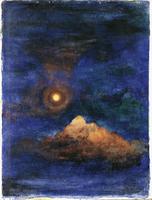
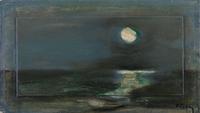
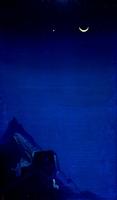
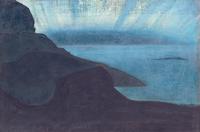
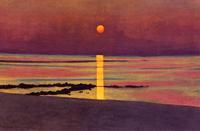
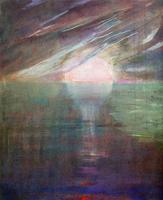
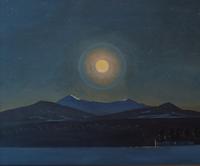
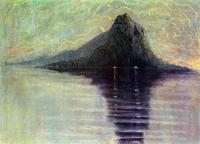
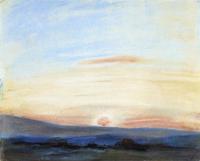
"Eclipse" by Nicholas Roerich exemplifies the Symbolist movement’s emphasis on spiritual and metaphysical themes through landscape. Roerich, a master of mystical and cosmic imagery, transforms a natural celestial event into a profound symbol of transition, mystery, and the interplay between light and darkness. The work’s significance lies in how it elevates the landscape genre beyond mere representation: the eclipse becomes a metaphor for hidden truths, the cyclical nature of existence, or a threshold between visible and invisible worlds. Roerich’s characteristic use of bold, luminous color and stark, simplified forms—often evoking the Himalayas or remote vistas—imbues the scene with an otherworldly, meditative quality. In the context of Symbolism, “Eclipse” stands as a quintessential example of how nature is used not for its own sake but as a vehicle for suggesting the ineffable, aligning with the movement’s rejection of realism in favor of emotional and spiritual resonance.