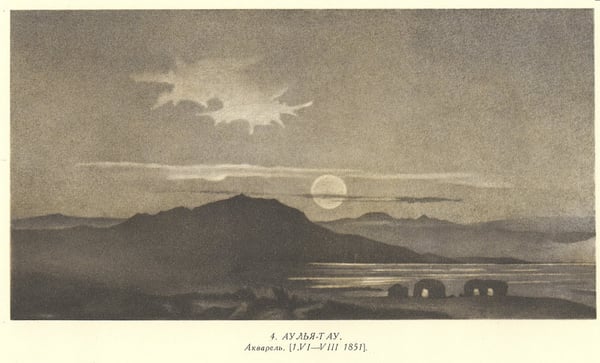
Analisi esperta di Aulia-Tau di Taras Shevchenko
Stile: Romanticism · Genere: landscape
Expert Analysis: Aulia-Tau by Taras Shevchenko (Romanticism, Landscape)
Aulia-Tau (1845) is a compelling example of Taras Shevchenko’s lesser-known but deeply evocative landscape work, created during a period when the artist was simultaneously cementing his legacy as Ukraine’s national poet. Painted in the Romantic style, the work draws on the era’s fascination with the sublime power of nature, but it also carries a distinctly personal and national significance that elevates it beyond a mere scenic study.
Romanticism and the Sublime
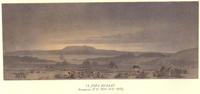
The title Aulia-Tau (likely referring to a mountain or rocky outcrop in Central Asia or the Caucasus) places the scene within a wild, untamed geography—a favored subject for Romantic artists seeking to evoke awe and emotional intensity. Shevchenko captures the rugged grandeur of the landscape through dramatic contrasts of light and shadow, a hallmark of Romantic painting. The composition likely emphasizes vertical rock formations or sweeping vistas that dwarf any human presence (if any is included), inviting the viewer to confront nature’s overwhelming power. This aligns with the Romantic preoccupation with the sublime: a mix of terror and wonder before the vastness of the natural world.
Shevchenko’s Unique Voice
What makes Aulia-Tau significant is how Shevchenko infused this universal Romantic theme with his own biography and national consciousness. At the time, Shevchenko was a serf-turned-artist who had recently been freed and was traveling through the Russian Empire. His landscapes often reflect a tension between personal liberty and the harsh realities of exile or oppression. Aulia-Tau may subtly foreshadow his later imprisonment in remote Central Asia (the Orsk Fortress, 1847–1857), where he would be forbidden from painting or writing. In this context, the mountain becomes more than a Romantic symbol; it stands as a metaphor for resilience and solitude—a defiant natural monument that echoes Shevchenko’s own unbreakable spirit and his longing for a free Ukraine.
Technical and Stylistic Significance
Shevchenko’s training at the Imperial Academy of Arts in St. Petersburg is evident in his assured handling of atmospheric perspective and geological detail. Yet Aulia-Tau avoids the academic tendency toward idealized, picturesque scenes. Instead, the brushwork is vigorous, the palette earthy and restrained (ochres, umbers, muted greens), and the lighting dramatic—suggesting a fleeting moment of stormy clarity. This raw, almost monochrome quality aligns with Shevchenko’s later graphic works, where line and shadow convey emotion more than ornamental beauty.
Legacy and National Identity
For Ukrainian art history, Aulia-Tau is crucial because it demonstrates that Shevchenko—who is typically canonized as a poet and political martyr—was also a master of landscape who used the genre to articulate a distinct Ukrainian visual identity. While Russian and European Romantics often exoticized the Caucasus or Central Asia, Shevchenko’s mountain feels un-idealized and intimately known, as if the land itself were a fellow exile. This empathetic approach to nature, rooted in the artist’s own experience of displacement, makes Aulia-Tau a bridge between Romantic universalism and the emerging national-romantic movement in Ukraine.
In summary, Aulia-Tau is significant not only as a fine Romantic landscape—with its sublime echoes and masterful chiaroscuro—but as a deeply personal, proto-nationalist statement. It captures the moment when Shevchenko’s artistic and political visions converged, transforming a distant mountain into a symbol of endurance, identity, and the enduring bond between a people and their land.
Genere
Stile
Visivamente simili
20 opere con composizione e palette affini
Moonlit night at Kos-Aral
Taras Shevchenko
Croagh Patrick
Elizabeth Thompson
Eclipse
Nicholas Roerich
July Thundercloud in the Val d'Aosta
John Ruskin
Sunset
Felix Vallotton
Red sunset
Arkhyp Kuindzhi
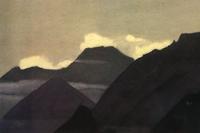
Kuluta. Mountains before the sunset.
Nicholas Roerich
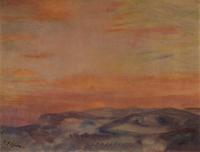
Sunrise at Zao
Fujishima Takeji
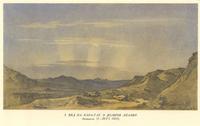
View of Karatau from Apazir valley
Taras Shevchenko
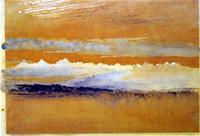
Dawn at Neuchatel
John Ruskin
View from Stara Planina
Felix Philipp Kanitz
Cloud over the mountain valley
Arkhyp Kuindzhi
Serenity
Mikalojus Konstantinas Ciurlionis
Storm Clouds Sunset
J.M.W. Turner
Moonlight
Ralph Blakelock
In the Hollow of His Hand
Elizabeth Thompson
Sunset Landscape
Thomas Stuart Smith
Ladakh. Kashmir.
Nicholas Roerich
Silver Moon
Eero Järnefelt
Kulaat mount
Taras Shevchenko