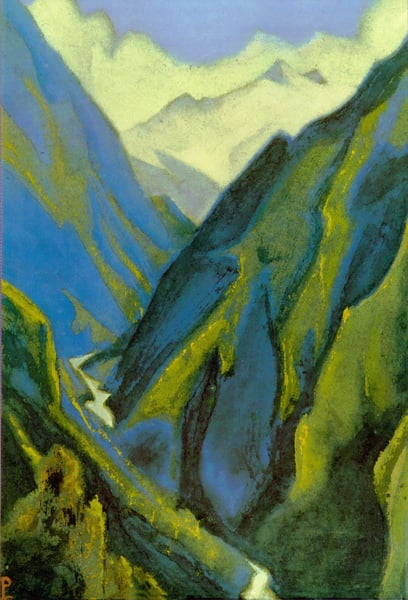
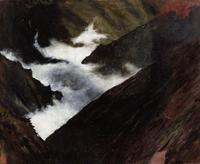
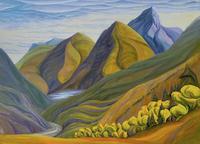
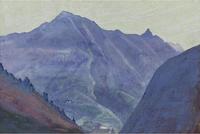
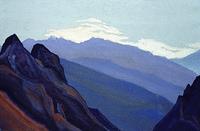
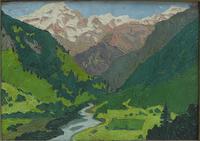
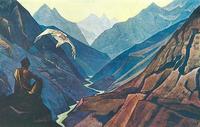
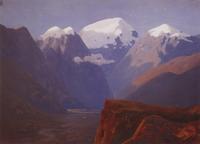
In analyzing "Ganges (Cold ravine)" by Nicholas Roerich, the work’s significance lies in how it embodies the core principles of Symbolism through the landscape genre. Roerich transforms a natural scene—a cold ravine near the sacred Ganges—into a vehicle for spiritual and metaphysical meaning, a hallmark of the Symbolist movement. The painting likely emphasizes mood, atmosphere, and evocative color over realistic topography, using the stark, cold ravine and the holy river as symbols of transcendence, purification, or the meeting of the physical and divine. Within Symbolism, such landscapes are not mere depictions but gateways to inner experience; Roerich’s choice of the Ganges, a river central to Hindu cosmology, deepens this symbolic resonance. The work’s significance thus lies in its ability to fuse a specific geographical feature with universal spiritual themes, demonstrating how Symbolist landscape painting elevates nature into a realm of philosophical and mystical contemplation.