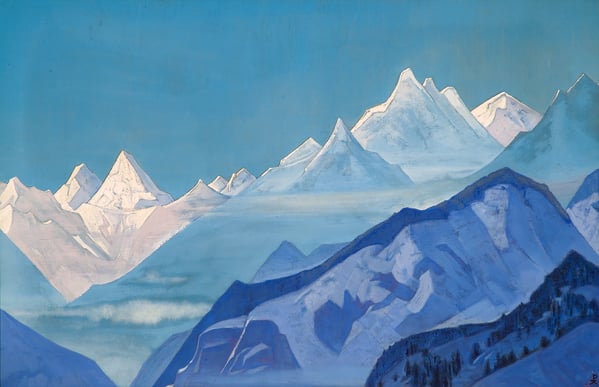
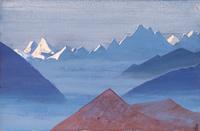
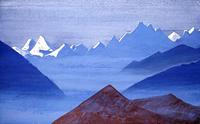
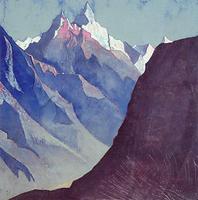
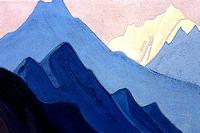
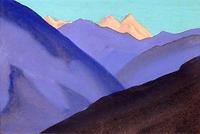
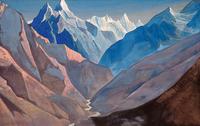
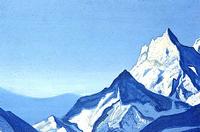
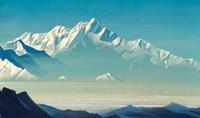
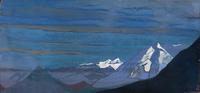
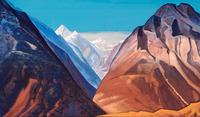
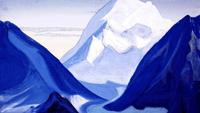
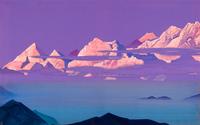
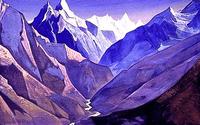
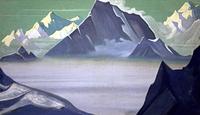
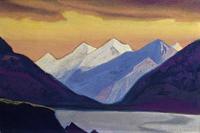
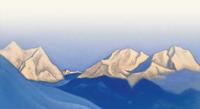
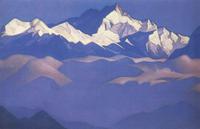
This artwork, Guru Guri Dhar by Nicholas Roerich, stands as a compelling example of Symbolist landscape painting. Within the Symbolist movement, landscape was rarely a mere topographical record; instead, it served as a vehicle for inner vision and spiritual meaning. The title itself—incorporating “Guru” (spiritual teacher) and “Dhar” (often denoting a mountain ridge or sacred place in Himalayan contexts)—immediately signals that the scene transcends physical geography. The significance of the work lies in its ability to transform a natural vista into a threshold for the sublime. By melding the landscape genre with Symbolist ideals, Roerich uses the stark majesty of mountains, the play of light, and the solemnity of the terrain to evoke a sense of heightened reality—a contemplative space where the material world hints at the divine. This fusion of observed nature with metaphysical symbolism exemplifies the period’s drive to express the ineffable through concrete yet suggestive imagery, making Guru Guri Dhar a key artifact of Symbolist landscape practice.