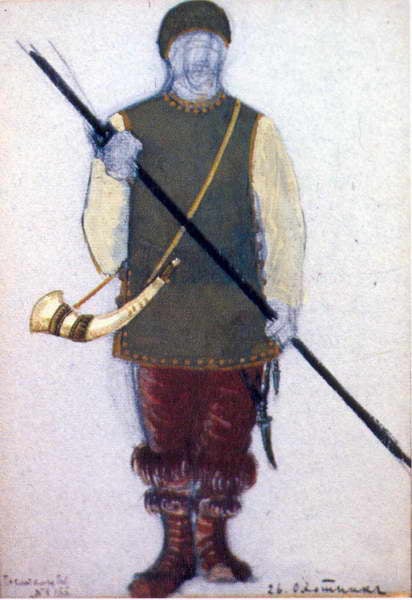
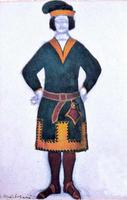
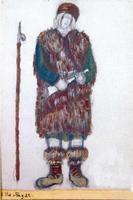
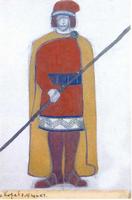
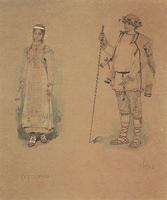
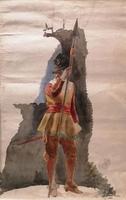
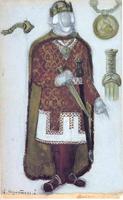
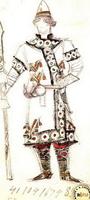
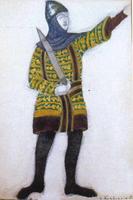
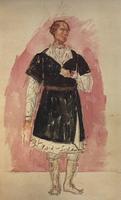
In "Hunter," Nicholas Roerich brings a distinctive spiritual and folkloric sensibility to the Art Nouveau (Modern) movement, elevating the genre of design into a vehicle for symbolic expression. The work's significance lies in how Roerich adapts Art Nouveau’s characteristic organic lines and decorative elegance—typical of the period’s emphasis on harmony between form and function—to convey a primal, mythic quality. As a design piece, “Hunter” likely integrates stylized natural motifs and a rhythmic, flowing composition, reflecting the Modernist desire to break from historical revivalism while still embracing craftsmanship. Roerich’s contribution is notable for infusing Art Nouveau’s cosmopolitan aesthetic with Russian and Eastern spiritual themes, creating a design that feels both contemporary and timeless. This work exemplifies how Art Nouveau could transcend mere ornamentation to become a narrative tool, making “Hunter” a key example of the movement’s expansion into mystical and cultural storytelling.