Expert analysis of Nicholas Roerich’s Mariners
Style: Art Nouveau (Modern) · Genre: design
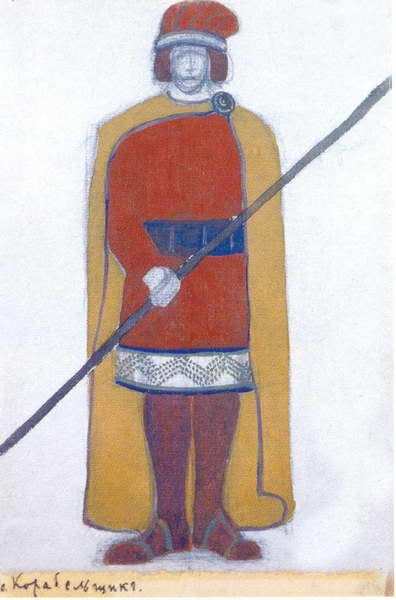
Expert Analysis: Mariners by Nicholas Roerich
Style & Period Context:
Created within the Art Nouveau (Modern) movement, Mariners exemplifies the era’s embrace of organic, flowing lines, stylized natural forms, and a synthesis of fine art with applied design. Art Nouveau sought to break down hierarchies between “high” art and everyday objects, and Roerich’s work—categorized here under the genre of design—reflects this principle directly. The piece is likely a preparatory study for theatrical stage sets, book illustrations, or decorative panels, as Roerich frequently worked in these applied arts.
Significance within Art Nouveau:
- Syncretic Vision: Roerich’s Mariners merges Nordic and Slavic mythologies with the linear elegance of Art Nouveau. The flowing garments of seafaring figures, curling wave motifs, and elongated silhouettes echo the sinuous “whiplash” curves typical of the style, yet they carry a symbolic, almost spiritual weight that sets Roerich apart from his contemporaries.
- Design as Fine Art: By classifying this work under “design,” we recognize Roerich’s contribution to the total work of art (Gesamtkunstwerk)—an ideal central to Art Nouveau. Mariners likely functioned as a cohesive visual element within a larger decorative scheme (e.g., a theater curtain or a book cover), where every line and hue contributed to an atmospheric, immersive experience.
- Modernist Purity: Unlike the more ornate, decorative tendencies of some Art Nouveau artists, Roerich’s palette here is restrained—earthy blues, deep greens, and muted golds—stripping away excess to emphasize rhythm and form. This aligns with the Modernist wing of the movement, which prioritized essential design over rote ornamentation.
Conclusion:
Mariners stands as a testament to Roerich’s ability to infuse decorative design with profound narrative and cultural memory. Its significance lies in demonstrating how Art Nouveau’s formal innovations could serve spiritual and mythological themes, elevating applied arts to a mode of transcendental expression. The work embodies the movement’s ambition to marry beauty with purpose, making it a key example of early modern design thinking.
Visually similar
20 works with related composition and palette
Mariners
Nicholas Roerich
King Mark
Nicholas Roerich
Servant
Nicholas Roerich
Courtier
Nicholas Roerich
Entourage
Nicholas Roerich
King Mark
Nicholas Roerich
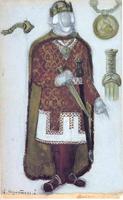
Tristan
Nicholas Roerich
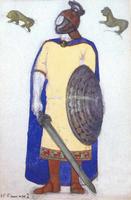
Knight
Nicholas Roerich
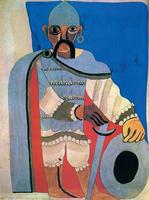
Prince Igor. A Sketch for the Opera 'Prince Igor' by A. Borodin.
Anatol Petrytsky
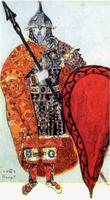
Prince Igor
Nicholas Roerich
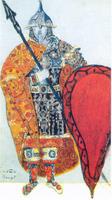
Igor
Nicholas Roerich
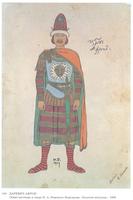
Costume design for the Opera, The Golden Cockerel, by Nikolai Rimsky-Korsakov
Ivan Bilibin
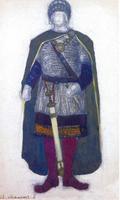
Malong
Nicholas Roerich
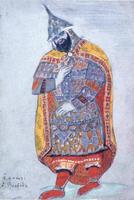
Voivode
Nicholas Roerich
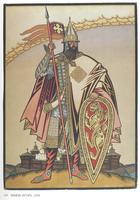
Costume design for the Opera "Prince Igor" by Alexander Borodin
Ivan Bilibin
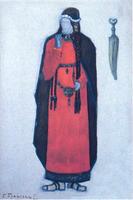
Brangena
Nicholas Roerich
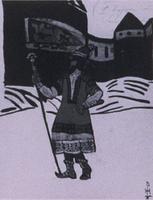
Sketch of costumes for "Snow Maiden"
Nicholas Roerich
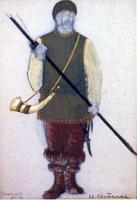
Hunter
Nicholas Roerich
Alexander Nevsky
Viktor Vasnetsov
Warrior
Nicholas Roerich