Expert Analysis: "Island of Rest" by Nicholas Roerich
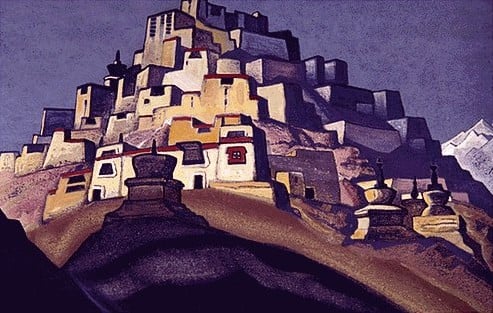
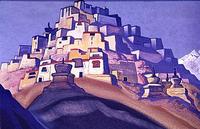
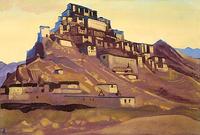
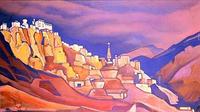
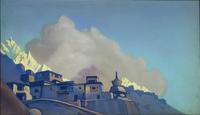
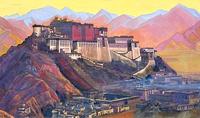
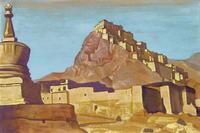
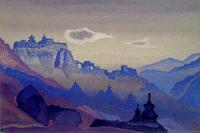
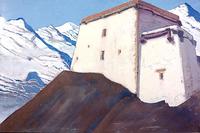
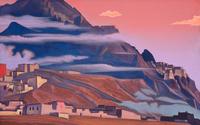
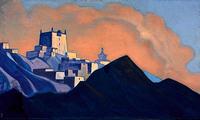
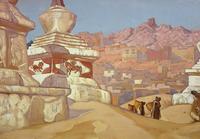
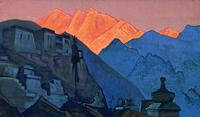
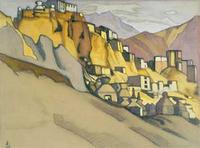
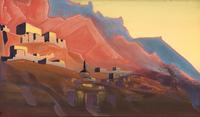
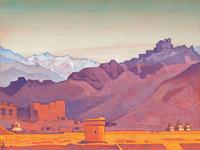
As a work of Symbolism in the cityscape genre, "Island of Rest" embodies Roerich’s distinctive fusion of architectural form with spiritual transcendence. The painting likely presents an urban enclave—perhaps a monastery, fortress, or serene settlement—set apart from worldly chaos, rendered in Roerich’s characteristic luminous, muted palette.
Its significance lies in how it transforms the cityscape into a metaphor for inner sanctuary. Unlike realist city views that emphasize physical detail, Roerich uses simplified, almost ethereal shapes and atmospheric color (deep blues, soft golds, white) to evoke a timeless, meditative state. The “island” becomes a symbol of refuge—a place where human construction harmonizes with nature and the divine. This aligns with Symbolism’s goal of expressing spiritual ideals through visual allegory, while Roerich’s unique synthesis of Eastern and Western mystical traditions gives the work a transcendent, almost sacred quality. The piece stands as a quiet but powerful example of how Symbolist cityscapes could move beyond documentation to become visions of cosmic order.