Expert Analysis of "Kara-Kirghizians" by Nicholas Roerich
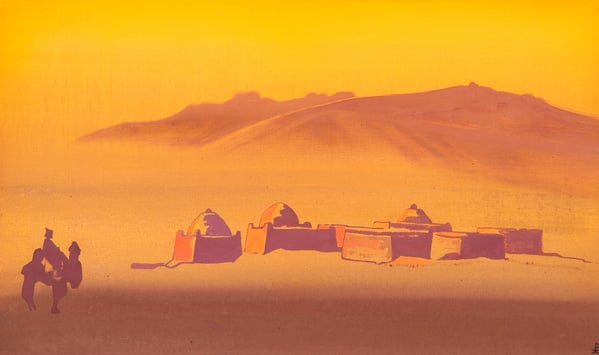
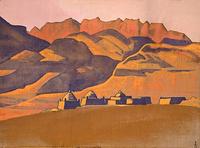
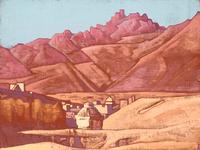
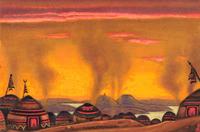
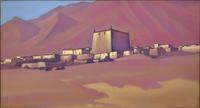
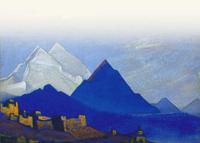
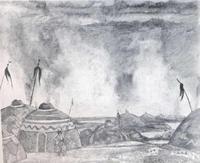
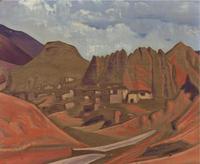
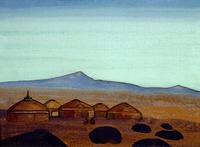
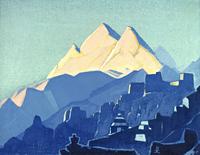
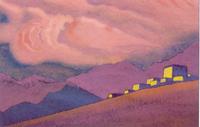
As a work of Symbolism cast in the landscape genre, Nicholas Roerich’s "Kara-Kirghizians" achieves significance through its ability to transform an observable terrain into a vessel for spiritual and cultural meaning. The artwork does not merely depict a geographical scene; it uses the landscape as a symbolic stage to evoke the timeless, nomadic essence of the Kara-Kirghiz people. Roerich’s treatment aligns with Symbolist principles by prioritizing mood, inner vision, and the interplay between the human spirit and the natural world. The stark, sweeping vistas and muted, earthy palette typical of his approach suggest a profound unity between the land and its inhabitants—a hallmark of his broader oeuvre. Within the Symbolist movement, this piece stands out for grounding abstract, metaphysical ideas in a specific, lived landscape, making the intangible tangible through the raw power of the environment. Its significance lies in how it elevates the landscape from mere setting to a symbolic protagonist, reflecting Roerich’s unique fusion of Eastern mysticism and Western Symbolist aesthetics.