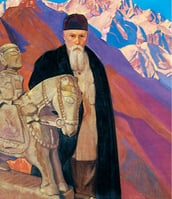
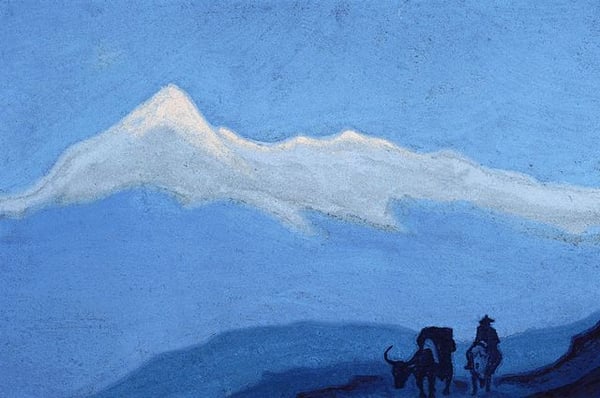
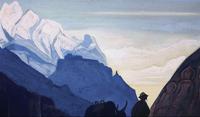
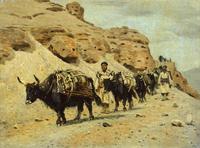
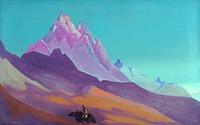
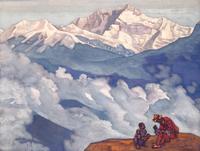
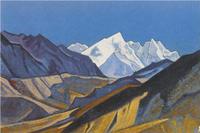
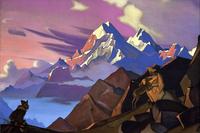
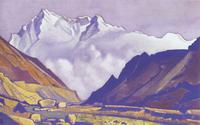
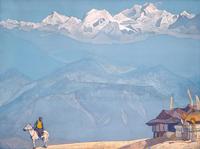
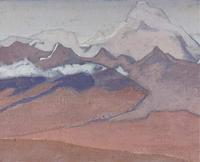
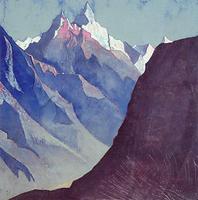
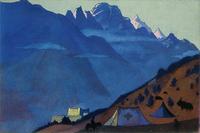
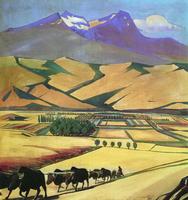
The painting Lonely Wanderer by Nicholas Roerich exemplifies the core tenets of Symbolism, a movement that prioritized inner spiritual experience over literal representation. Roerich, deeply influenced by Eastern philosophy and Theosophy, often depicted solitary figures traversing vast, primordial landscapes. In this genre painting—which typically captures scenes of everyday life—Roerich transforms the mundane into a metaphysical journey. The lone wanderer is not merely a traveler but a symbol of the soul's pilgrimage toward higher knowledge, set against towering, unpeopled mountains that evoke both the sublime and the eternal. The work’s significance lies in how it merges the Symbolist interest in the unseen with Roerich’s unique synthesis of Russian folk mysticism and Himalayan spirituality, creating a visual meditation on solitude, transcendence, and the human place within a cosmic order. This makes Lonely Wanderer a quintessential example of Symbolist art’s power to imbue ordinary subjects with profound, universal meaning.