Expert Analysis: "Mongolian tsam" by Nicholas Roerich
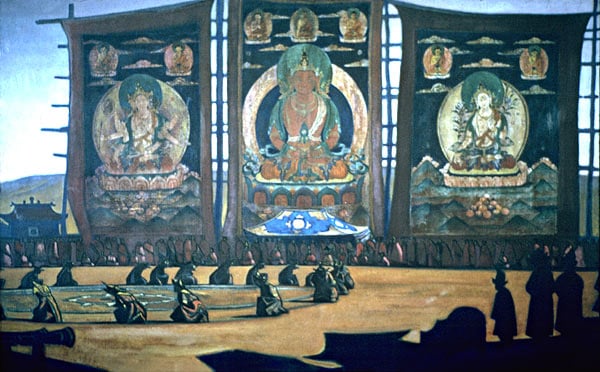
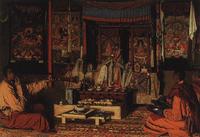
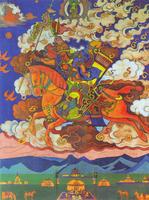
Within the Symbolist movement, Nicholas Roerich’s "Mongolian tsam" stands as a profound fusion of spiritual mysticism and ethnographic observation. The work depicts a Tsam dance—a Tibetan Buddhist ritual performed by masked monks—but Roerich transcends mere documentation. For Roerich, the Tsam was not simply a cultural performance but a living symbol of humanity’s connection to the divine and the cosmic order.
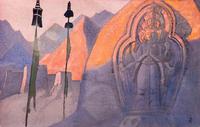
The painting’s significance lies in how Roerich uses the Symbolist language to elevate a genre painting into a metaphysical statement. Symbolism prized the evocative power of color, form, and atmosphere over direct representation; here, the stark, elemental landscape and the rhythmic, almost hieratic arrangement of the figures suggest a ritual frozen in time, linking the earthly realm to a higher, spiritual plane. Roerich’s characteristic palette—deep blues, ochres, and stark whites—imbues the scene with a sense of the eternal, while the masks themselves become archetypes of transformation and spiritual struggle.
In the context of Symbolism’s turn away from materialism and toward inner vision, "Mongolian tsam" is significant for its cross-cultural synthesis. Roerich believed the ancient wisdom of Asia held keys to universal truths, and this painting embodies that belief, making the ritual accessible as a symbol of humanity’s quest for transcendence. It is a genre scene raised to the level of sacred iconography.