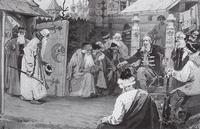
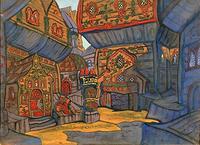
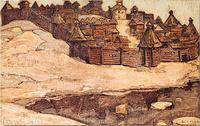
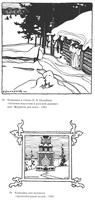
Nicholas Roerich’s Three Pleasures is a quintessential example of Art Nouveau’s embrace of symbolic, decorative elegance fused with allegorical depth. Within the Art Nouveau tradition, the work stands out for its fluid, organic forms and its use of color and line to evoke spiritual or moral ideas rather than literal narrative. As an allegorical painting, it invites viewers to decode the three figures or elements representing distinct “pleasures”—likely alluding to themes of beauty, harmony, and transcendence, common in Roerich’s mystical oeuvre. The significance lies in how the composition balances the ornamental sensuality of Art Nouveau (curving lines, flat decorative patterns) with a serious philosophical inquiry, elevating decorative style into a vehicle for symbolic meaning. This dual focus makes Three Pleasures a notable work bridging the aesthetic and the metaphysical in early modern art.