
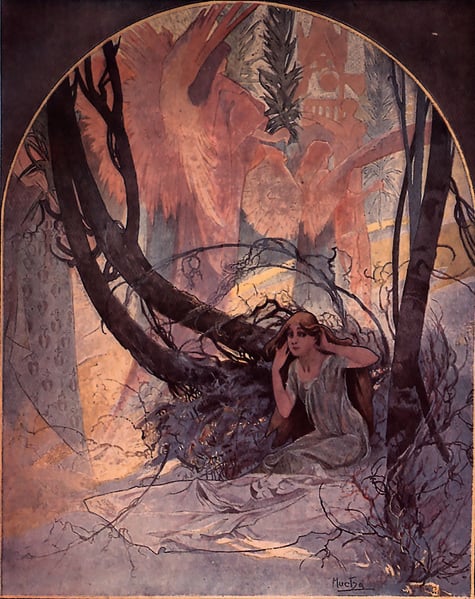
Expert analysis of Alphonse Mucha’s Easter Chimes Awaken Nature
Style: Symbolism · Genre: allegorical painting
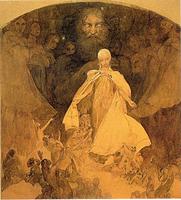
Expert Analysis: "Easter Chimes Awaken Nature" by Alphonse Mucha
Alphonse Mucha’s Easter Chimes Awaken Nature stands as a quintessential example of Symbolist allegory, where the artist transcends mere seasonal illustration to weave a layered meditation on rebirth, sound, and the sacred. In this work, Mucha departs from his more commercial Art Nouveau posters to embrace the introspective, mystical currents of late-19th-century Symbolism.
Allegorical Structure: The painting personifies Nature as a female figure, dormant yet stirring, roused by invisible chimes. This allegory is not literal but evocative: the chimes symbolize the spiritual resonance that awakens both the physical world (spring) and the human soul. Mucha uses the Easter motif—traditionally a Christian celebration of resurrection—to universalize renewal, merging pagan nature worship with religious transcendence.
Significance Within Symbolism: Mucha’s approach here is significant for its synthesis of decorative elegance and symbolic depth. Where many Symbolists favored dark, ambiguous imagery, Mucha bathes the scene in light and floral flourishes, yet retains the movement’s core aim: to express inner states through external forms. The flowing lines and halo-like framing recall his iconic style, but the composition’s upward gaze and gentle awakening gesture anchor the work firmly in Symbolist idealism—the belief that art can reveal invisible truths through beauty.
Context and Legacy: Created during Mucha’s later, more philosophically driven phase, this painting exemplifies his Slav Epic-era aspiration to elevate decorative art into a vehicle for spiritual storytelling. By choosing Easter chimes—a sound that vibrates through air and memory—Mucha captures the ephemeral yet potent moment between winter and spring, silence and song. It remains a masterful instance of how Symbolist allegory can transform a calendar event into a timeless meditation on awakening.
Visually similar
20 works with related composition and palette
The Swan Maidens
Walter Crane
Illustration for Vyšehrad
Artuš Scheiner
Figures In A Spring Landscape
Maurice Denis
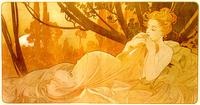
Dusk
Alphonse Mucha
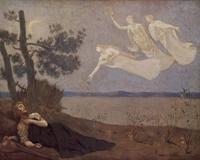
The Dream: "In his sleep he Saw Love, Glory and Wealth Appear to Him"
Pierre Puvis de Chavannes
Mort
Carlos Schwabe
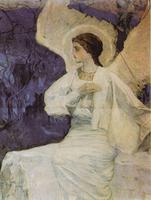
Angel on the Holy Sepulchre
Mikhail Nesterov
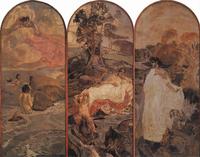
The Judgement of Paris
Mikhail Vrubel
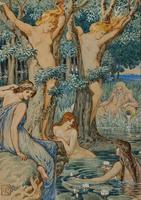
Nyads and Dryads
Walter Crane
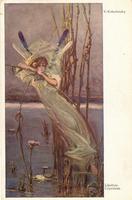
Dragonfly
Wilhelm Kotarbinski
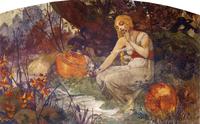
Prophetess
Alphonse Mucha
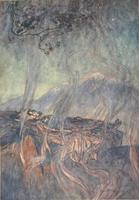
The sleep of Brünnhilde
Arthur Rackham
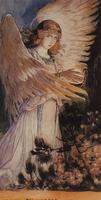
Angel with a lamp
Viktor Vasnetsov
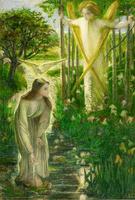
The Annunciation
Dante Gabriel Rossetti
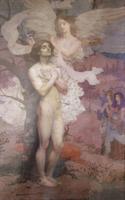
Reward of Saint Sebastian
Eliseu Visconti
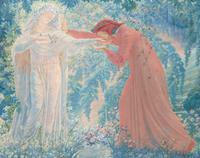
Dante Drinking the Waters of Lethe
Jean Delville
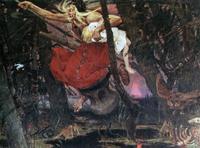
Baba Yaga
Viktor Vasnetsov
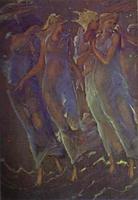
Nymphs of the Stars
Edward Burne-Jones
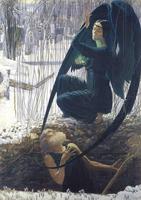
Death and the Grave Digger
Carlos Schwabe
Age of Wisdom
Alphonse Mucha