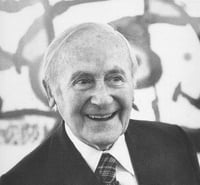
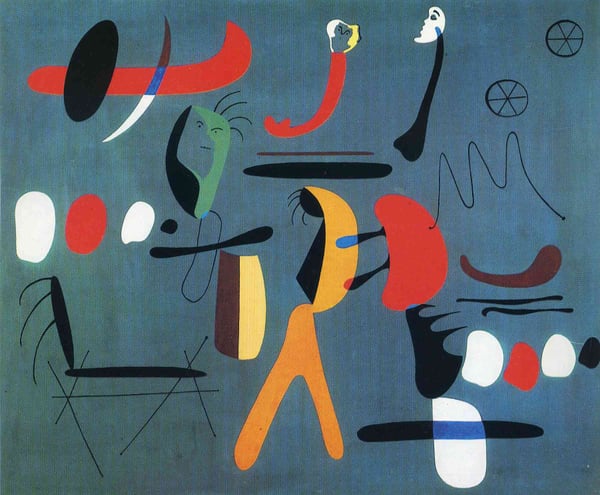
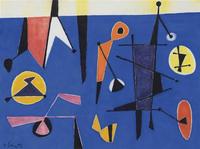
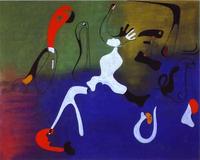
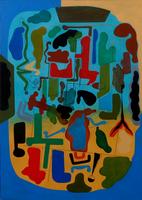
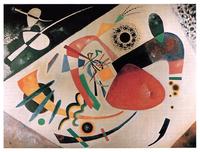
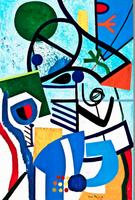
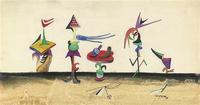
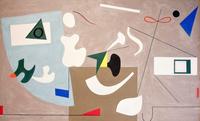
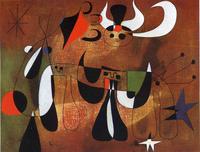
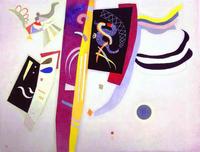
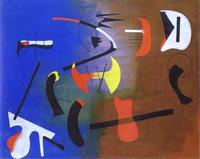
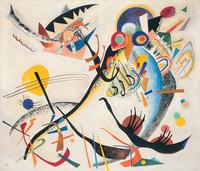
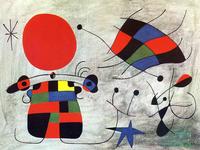
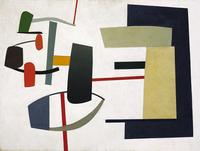
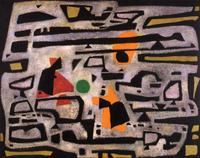
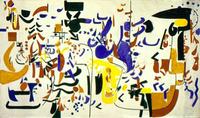
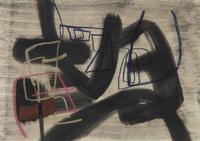
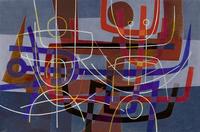
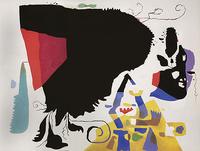
Joan Miró’s Painting is a landmark within Surrealism for its radical embrace of pure abstraction. While many Surrealists relied on recognizable dream imagery, Miró pushed the movement toward a non-representational language, using spontaneous, biomorphic forms and a reduced palette to access the unconscious directly. The work’s significance lies in how it embodies the Surrealist principle of automatism—allowing the hand to move freely without rational control—resulting in a composition that feels both childlike and deeply sophisticated. As an abstract piece, it strips painting of narrative and recognizable subject matter, positioning Miró as a pioneer who expanded Surrealism’s boundaries and influenced later movements such as Abstract Expressionism.