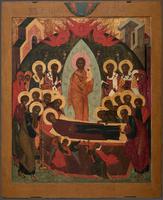
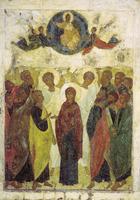
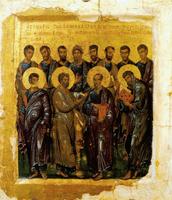
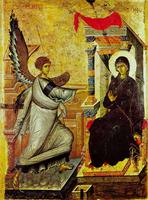
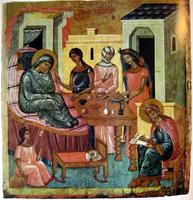
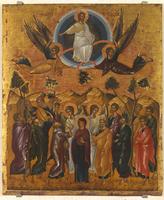
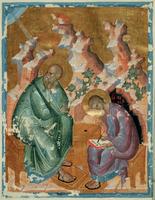
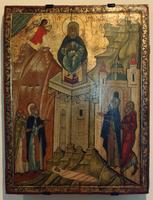
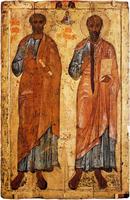
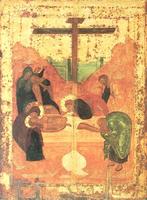
Andrei Rublev’s Presentation of Jesus at the Temple stands as a masterwork of the Moscow school of icon painting within the Byzantine tradition, encapsulating the spiritual depth and refined aesthetic that define his legacy. Painted in the early 15th century, this icon is significant for its harmonious blend of Byzantine theological rigor with a distinctly Russian sense of grace and interiority.
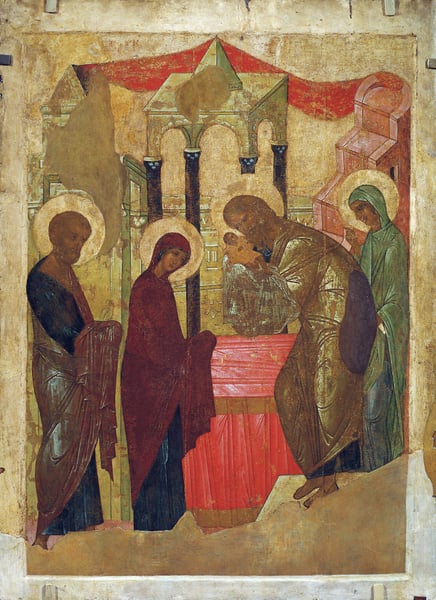
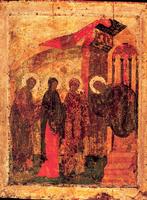
The composition follows the feast of the Meeting of the Lord (Candlemas), depicting the infant Christ being received by the elderly Simeon, with the prophetess Anna at left. Rublev elevates this moment of encounter into a meditation on divine revelation. His use of soft, luminous colors—pale gold, cerulean blue, and warm ochre—creates an ethereal atmosphere, while the simplified, elongated figures exhibit a calm, almost weightless poise typical of his finest work. The architectural elements, though stylized, frame the scene without distracting from the central spiritual exchange.
What makes this artwork significant is Rublev’s ability to move beyond the rigid frontality of earlier Byzantine icons toward a more human tenderness, yet without compromising sacred solemnity. The subtle tilt of Simeon’s head and the gentle curve of Mary’s form convey profound humility and recognition. This icon exemplifies the Moscow school’s synthesis: it upholds the canonical typology of Byzantine iconography—hierarchical scale, gold halos, inverse perspective—while infusing it with a lyrical softness that anticipates later Russian spiritual art. Rublev’s work here influenced generations of icon painters and remains a touchstone for the theological power of the icon as a “window into heaven.”