Expert Analysis of "St. Laurus" by Andrei Rublev
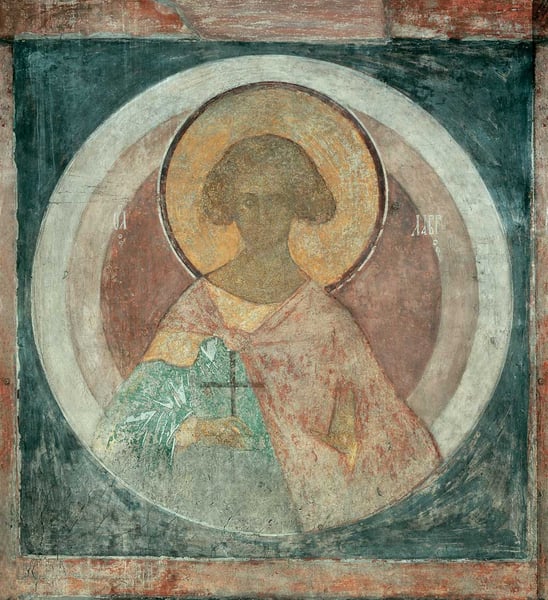
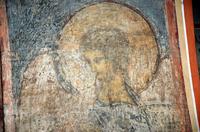
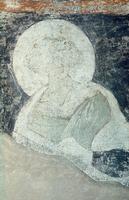
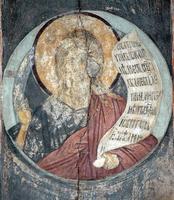
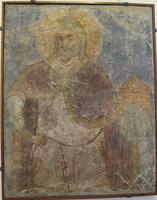
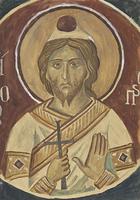
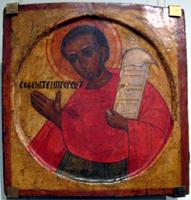
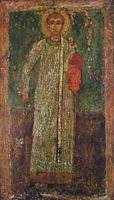
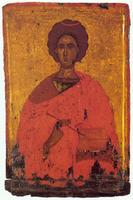
Andrei Rublev’s St. Laurus stands as a masterful example of the Moscow school of icon painting, a late flowering of the Byzantine tradition that infused rigid religious conventions with a new depth of spiritual grace. Within the genre of religious painting—specifically the icon—this work is significant for its demonstration of Rublev’s signature synthesis of Byzantine solemnity and an emerging Russian tenderness.
The icon depicts St. Laurus, a figure often venerated alongside St. Florus as a patron of horsemen and agriculture. Rublev elevates the saint beyond mere hagiographic representation: through subtle modulation of color and a serene, elongated facial type, he achieves a contemplative calm that invites the viewer into silent prayer. This reflects the Moscow school’s departure from the harsher, more austere models of earlier Byzantine art, favoring instead a harmonious, lyrical quality.
What makes St. Laurus particularly significant is its embodiment of the Hesychast spiritual ideal—the pursuit of inner stillness and divine light—which Rublev rendered through soft, glowing highlights and balanced composition. Although less famous than his Trinity, this icon reveals the artist’s ability to transform a conventional saintly portrait into an enduring testament of faith, where every line and pigment serves a theological purpose. In the context of Byzantine and Moscow school painting, St. Laurus affirms Rublev’s role as the preeminent iconographer who humanized the sacred without sacrificing its transcendent power.