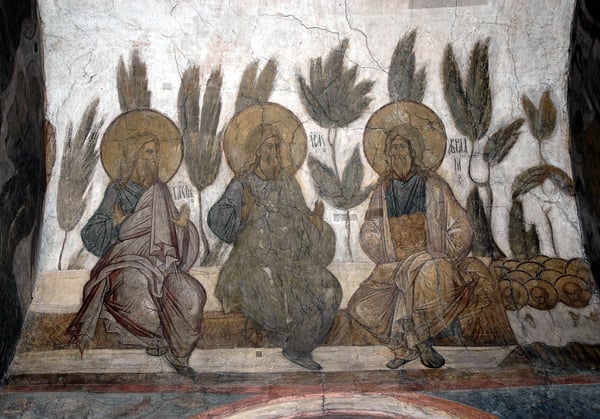
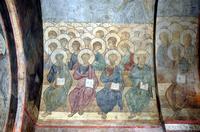
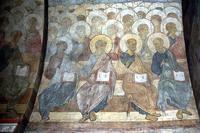
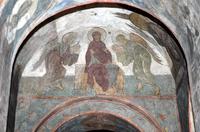
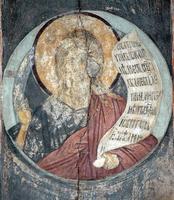
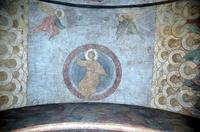
Andrei Rublev's The Last Judgement: Jacob, Abraham and Isaac in Heaven stands as a masterwork of the Moscow school of icon painting, synthesizing Byzantine theological rigor with a distinctly Russian emotional warmth. Painted during the early 15th century—a golden age of Russian iconography—the work is significant for its subtle departure from the austere, often intimidating Byzantine tradition of the Last Judgment.
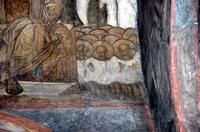
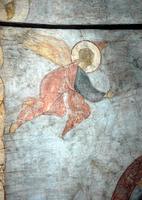
Rublev humanizes the eschatological scene. The three patriarchs, Abraham, Isaac, and Jacob, are not remote, judging figures but gentle intercessors, their elongated forms and calm, inward gazes reflecting a state of divine grace rather than terror. The composition emphasizes hospitality and paradisiacal peace: Abraham holds the souls of the blessed as children in his bosom (a motif from the Gospel parable), while Isaac and Jacob flank him in a rhythmic, symmetrical arrangement that draws the viewer into a contemplative stillness.
The color palette—soft ochres, warm reds, and luminous whites—is characteristic of Rublev’s sensitivity. It abandons the harsh gold and deep blues of earlier Byzantine icons for a more accessible, compassionate tone. This choice marks the Moscow school’s shift toward a spirituality centered on mercy and unity with God, rather than judgment. The use of reverse perspective and the delicate, flowing linework create a sense of the unearthly, yet the faces retain a tender humanity.
Ultimately, this icon transcends its liturgical function by offering an image of heaven not as a courtroom but as a family gathering—a vision that would deeply influence Russian religious art and reaffirm Rublev’s legacy as a painter of profound theological insight and artistic harmony.