Expert analysis of Ivan Shishkin’s Forest Landscape
Style: Realism · Genre: landscape
Expert Analysis: "Forest Landscape" by Ivan Shishkin
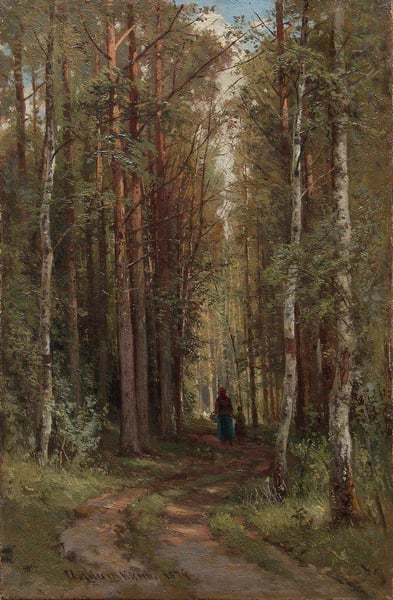
Ivan Shishkin (1832–1898) is widely regarded as the master of the Russian forest, and Forest Landscape stands as a quintessential example of his contribution to the Realist movement. Working within the circle of the Peredvizhniki (The Wanderers), Shishkin rejected idealized, Romantic conventions in favor of a scientific, almost photographic fidelity to nature. This painting is significant for several reasons:
1. Meticulous Botanical Realism
Shishkin’s approach was almost encyclopedic. In Forest Landscape, every trunk, branch, and needle is rendered with extraordinary precision. He studied the structure of trees—their bark textures, growth patterns, and the way light filters through a canopy—with the eye of a naturalist. This attention to detail elevates the work beyond mere scenery; it becomes a document of the Russian wilderness, celebrating its specific flora with a dignity usually reserved for portraiture.
2. Mastery of Light and Atmosphere
Despite its surface-level detail, the painting is not a dry inventory. Shishkin uses chiaroscuro to create depth and mood. Dappled sunlight breaks through the dense foliage, casting intricate shadows on mossy ground and fallen logs. The play of light animates the scene, suggesting a specific time of day—likely late afternoon—and infusing the forest with a quiet, almost spiritual presence. This interplay between meticulous draftsmanship and atmospheric effect is a hallmark of Shishkin’s style and a key achievement of Realist landscape.
3. Symbolism of the Russian Forest
In the context of 19th-century Russian culture, the forest carried deep nationalistic and spiritual connotations. Shishkin’s forests are not wild or terrifying; they are orderly, majestic, and intimately known. Forest Landscape embodies the idea of rodina (homeland) as a tangible, nurturing force. It aligns with the Peredvizhniki’s mission to depict everyday Russian life and nature with honesty and reverence, offering a counterpoint to the aristocratic gardens and classical ruins favored by academic painters.
4. Scale and Immersion
Shishkin often painted on large canvases to immerse the viewer in the scene. While the exact dimensions of this work are not provided, his typical compositions invite the eye to explore from the foreground’s tangled undergrowth to the distant, hazy treetops. This creates a sense of being physically present within the forest, a technique that reinforces the Realist goal of direct, unmediated experience of nature.
Significance within Realism
Forest Landscape exemplifies how Realism could elevate a humble subject to monumental status. Shishkin’s refusal to embellish or dramatize—his insistence on what he called “the truth of the forest”—challenged viewers to find beauty in the ordinary. Alongside contemporaries like Ilya Repin, he expanded the scope of Russian Realism, proving that landscape could carry the same emotional and ideological weight as historical or genre painting. Today, his work remains a touchstone for the transcendent power of meticulous observation.
Visually similar
20 works with related composition and palette
Birch Grove
Ivan Shishkin
Forest
Ivan Shishkin
Forest stream
Ivan Shishkin
Birch Grove
Ivan Shishkin
In The Birch Tree Forest
Ivan Shishkin
Noon in the Woods
Efim Volkov
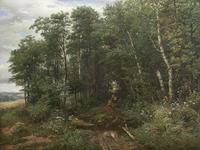
Mushroom pickers
Ivan Shishkin
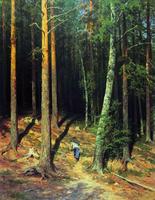
Pine forest
Ivan Shishkin
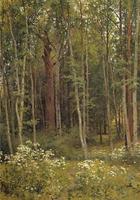
Covert
Ivan Shishkin
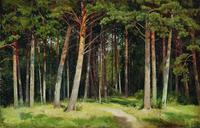
Pine forest
Ivan Shishkin
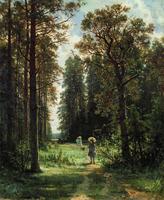
The Path through the Woods, 1880 (oil on canvas)
Ivan Shishkin
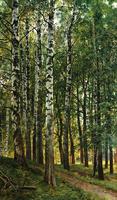
Birch Grove
Ivan Shishkin
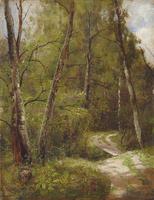
The path in the forest
Ivan Shishkin
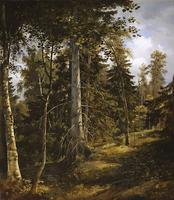
Covert
Ivan Shishkin
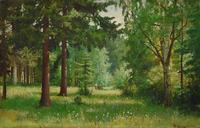
Children in the forest
Ivan Shishkin
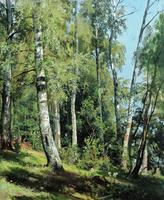
Birch Grove
Ivan Shishkin
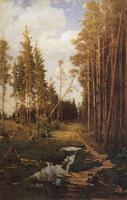
Glade in a pine forest
Aleksey Savrasov
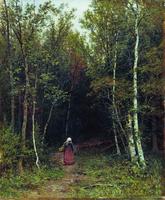
Landscape with a Woman
Ivan Shishkin
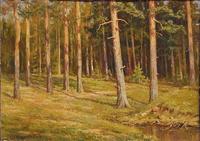
Pine forest
Ivan Shishkin
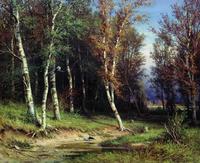
Forest before the storm
Ivan Shishkin