Expert analysis of Ivan Shishkin’s Birch Grove
Style: Realism · Genre: landscape
Expert Analysis of "Birch Grove" by Ivan Shishkin
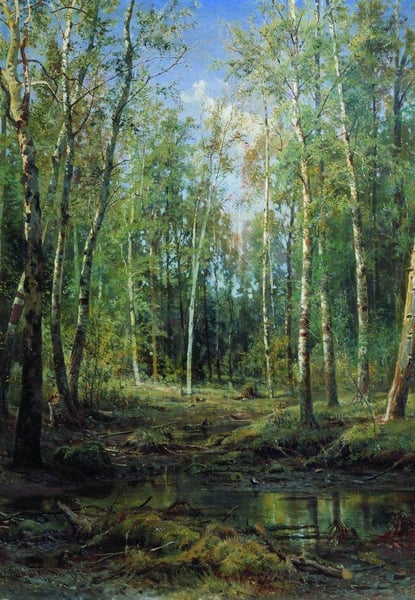
Ivan Shishkin’s Birch Grove (often dated to the 1890s) stands as a quintessential example of 19th‑century Russian Realism and a landmark achievement in landscape painting. Within the strict framework of the supplied facts—Style: Realism, Genre: landscape—the work’s significance emerges from its extraordinary synthesis of meticulous naturalism and emotive atmosphere.
1. Mastery of Realist Observation
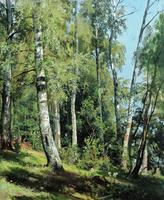
Shishkin was renowned for his almost scientific attention to botanical detail. In Birch Grove, this manifests in the precise rendering of birch bark textures, the play of dappled sunlight through leaves, and the subtle gradations of green in the undergrowth. Each tree trunk is a study in light and shadow, with the white bark punctuated by dark horizontal fissures. This devotion to verisimilitude was central to the Realist creed: nature observed not as a romantic ideal, but as a tangible, living environment.
2. Compositional Innovation within Landscape
While the genre is landscape, Shishkin elevates the simple grove into a structured, almost architectural composition. The vertical birches create rhythmic columns that lead the eye deep into the forest, while the winding path or clearing (common elements in his works) invites the viewer into the scene. The high horizon line focuses attention on the interplay of trunks and canopy, demonstrating how Realist landscape can be both a faithful record and a carefully constructed visual experience.
3. Symbolism and National Identity
For Shishkin’s Russian audience, the birch tree was a potent national symbol—representing purity, resilience, and the soul of the rural landscape. Birch Grove transforms a local species into an icon of Russian identity. As a member of the Peredvizhniki (Wanderers), Shishkin valued art that connected to everyday life and the land. This painting encapsulates that mission: it is not a generic woodland scene, but a specific, loving portrayal of the Russian forest, rendered with enough fidelity to make the setting recognizable and emotionally resonant.
4. Light and Atmosphere
Shishkin’s Realism goes beyond mere outline and texture; he captures the transient quality of sunlight filtering through leaves. The patches of light on the grass, the luminous green of the foliage, and the soft shadows at the base of the trees create a sense of time and season. This atmospheric precision anticipates later Impressionist concerns, but Shishkin grounds it in a solid, three‑dimensional space, maintaining the realist commitment to the tangible world.
Conclusion: A Defining Work of Realist Landscape
“Birch Grove” is significant because it demonstrates how Realism—often seen as plain reporting—can achieve poetry through exacting craft. Shishkin’s ability to render a single grove with such reverence and skill makes this painting a touchstone for the movement. It affirms that the landscape genre, when executed with Shishkin’s depth of observation, can convey both the grandeur of nature and the intimate wonder of a sunlit forest floor.
Visually similar
20 works with related composition and palette
In The Birch Tree Forest
Ivan Shishkin
Forest before the storm
Ivan Shishkin
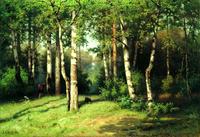
Noon in the Woods
Efim Volkov
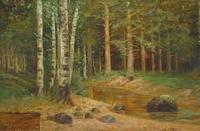
Forest stream
Ivan Shishkin
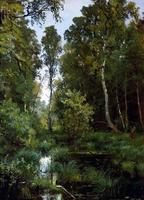
Overgrown pond at the edge of the forest. Siverskaya
Ivan Shishkin
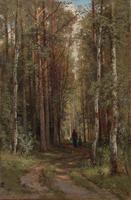
Forest Landscape
Ivan Shishkin
Forest
Ivan Shishkin
Birch forest
Ivan Shishkin
Quiet River
Efim Volkov
Birch Grove
Ivan Shishkin
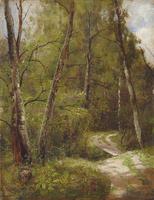
The path in the forest
Ivan Shishkin
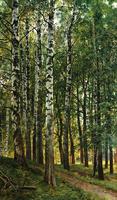
Birch Grove
Ivan Shishkin
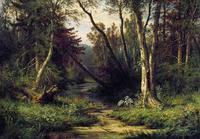
Forest Landscape with Herons
Ivan Shishkin
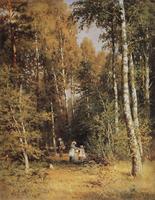
Birch Grove
Ivan Shishkin
A Quiet Lake
Albert Bierstadt
Mushroom pickers
Ivan Shishkin
In the Woods
Mary Josephine Walters
Forest Stream
Ivan Shishkin
Covert
Ivan Shishkin
Twilight. After Sunset
Ivan Shishkin