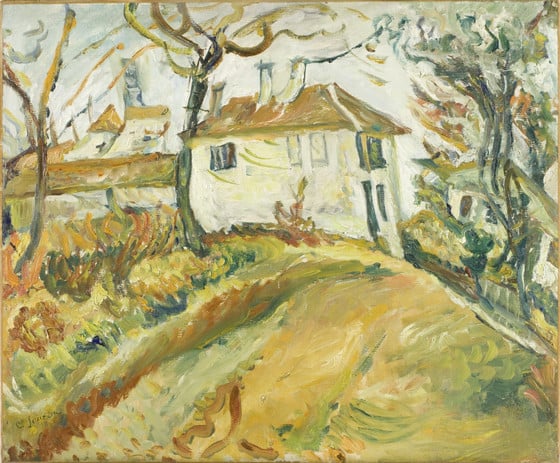
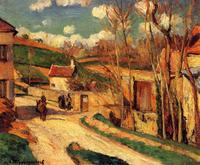
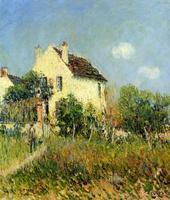
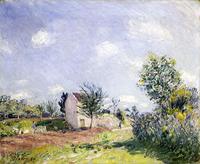
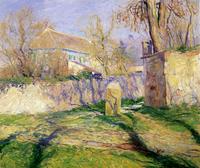
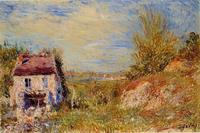
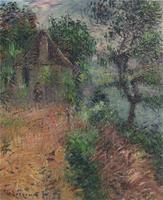
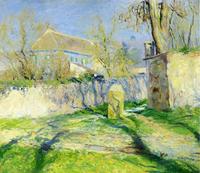
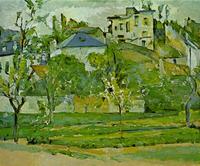
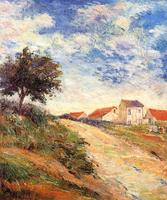
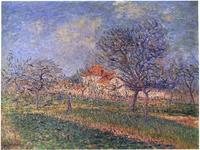
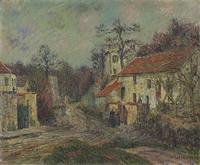
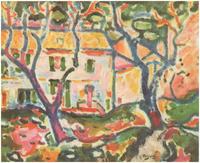
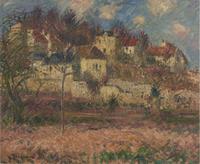
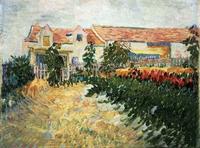
"White House on a Hill" by Chaim Soutine is a compelling example of Expressionist landscape painting. Within the Expressionist movement, landscapes were often transformed from mere depictions of nature into charged emotional and psychological statements. Soutine’s work here likely subverts traditional pastoral tranquility: the isolated white house perched on a hill can be read as a symbol of existential precariousness, its stark whiteness contrasting with the surrounding environment, possibly rendered in turbulent, gestural brushstrokes and vivid, non-naturalistic colors typical of the style.
The significance of this piece lies in how it pushes landscape beyond objective representation. Instead of a serene countryside, Soutine imbues the scene with a sense of distortion and agitation—a hallmark of Expressionism that prioritizes inner feeling over external accuracy. The "white house" becomes a focal point of tension, set against a hill that may feel more like a writhing form than a stable landmass. This approach challenges the viewer to experience the landscape not as a place, but as a state of mind. In the context of early 20th-century art, Soutine's treatment exemplifies Expressionism’s radical break from Impressionism’s optical realism, moving toward a raw, visceral subjectivity that would later influence abstract and figurative painting alike.