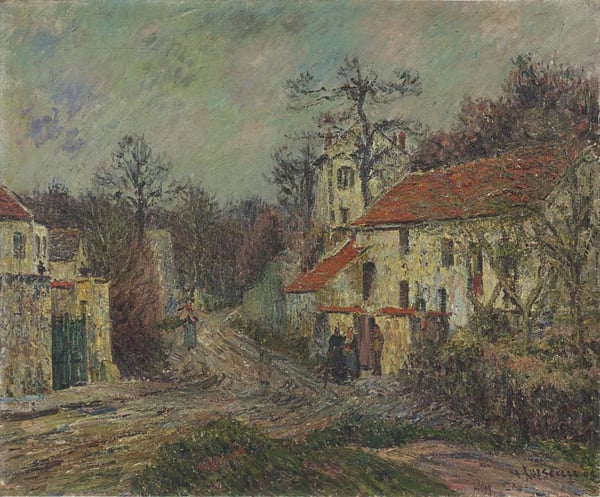
Winter in Chaponival
Expertenanalyse zu Gustave Loiseaus Winter in Chaponival
Stil: Post-Impressionism · Genre: cityscape
Expert Analysis of "Winter in Chaponival" by Gustave Loiseau
Gustave Loiseau’s Winter in Chaponival is a compelling example of Post-Impressionist cityscape painting that captures the unique atmospheric and emotional qualities of a winter scene. While Loiseau is often associated with the Pont-Aven School and his later serial landscapes, this work demonstrates his mature approach to depicting the interplay of light, season, and structure.
Significance within Post-Impressionism:
Loiseau belongs to the broader Post-Impressionist movement that evolved from Impressionism, retaining its interest in natural light and outdoor scenes but moving toward more structured compositions and expressive color. In Winter in Chaponival, he achieves this through several key elements:
-
Broken color and rhythmic brushwork: Loiseau applies paint in distinct, separate strokes, creating a textured surface that suggests both the chill of winter air and the solidity of built forms. This technique, akin to that of his contemporaries (such as Seurat or Signac in pointillism, though Loiseau’s is looser), gives the canvas a vibrant, shimmering quality even as it depicts a quiet, cold season.
-
Atmospheric effect: The painting’s winter setting is not merely a backdrop but a central subject. Loiseau’s palette likely shifts toward cool grays, muted whites, and deep, shadowed blues, contrasting with warmer accents on windows or rooftops. This captures the transient light of winter—low, diffuse, and often overcast—transforming an ordinary village street into a study of stillness and weather.
-
Cityscape as genre: Loiseau elevates the humble urban or suburban view by focusing on its structural rhythms. The arrangement of houses, trees, and the road forms a balanced composition that leads the eye through the scene. His simplification of forms (e.g., geometric rooflines, bare branches) echoes the Post-Impressionist tendency to prioritize design over photographic detail.
-
Personal expression: While rooted in observation, Winter in Chaponival is deeply subjective. The painting conveys a mood of quiet resilience and the beauty of the mundane—a hallmark of Loiseau’s work. He avoids sentimentality, instead using color and texture to evoke the tactile cold and the hush of winter.
Conclusion:
This painting is significant because it exemplifies how Post-Impressionist artists like Loiseau extended Impressionism’s focus on fleeting moments into a more deliberate, constructed vision of landscape and city life. Winter in Chaponival stands as a testament to his ability to find harmony in nature’s bare essentials, making a quiet winter day feel monumental through painterly innovation.
Visuell ähnlich
20 Werke mit ähnlicher Komposition und Farbpalette
Crossroads at l'Hermitage, Pontoise
Camille Pissarro
The diligence
Camille Pissarro
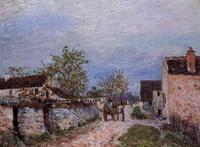
Street in Veneux
Alfred Sisley
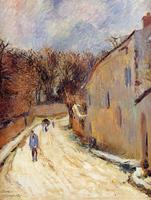
Osny, rue de Pontoise, Winter
Paul Gauguin
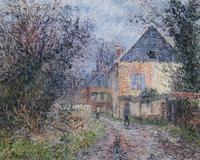
Houses near the Eure
Gustave Loiseau
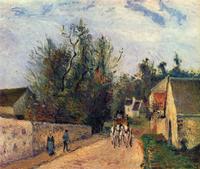
The Stage on the Road from Ennery to l'Hermigate, Pontoise
Camille Pissarro
Village on the hill
Gustave Loiseau
Road to Versailles
Gustave Loiseau
Thaw, Pontoise
Camille Pissarro
The street of the Citadelle, Pontoise
Camille Pissarro
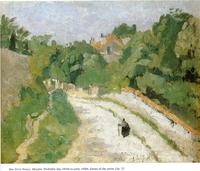
Rue Terre Neuve, Meudon
Gwen John
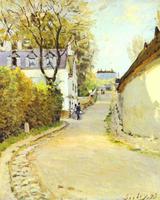
Street in Ville d Avray
Alfred Sisley
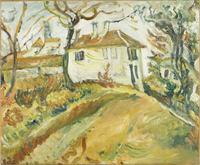
White House on a Hill
Chaim Soutine
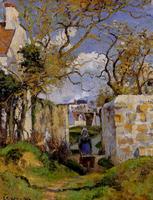
Peasant Pushing a Wheelbarrow, Maison Rondest, Pontoise
Camille Pissarro
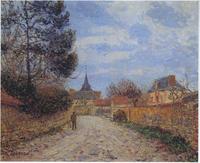
Church at Notre Dame by the Eure
Gustave Loiseau
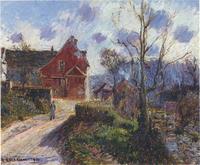
The red painted house
Gustave Loiseau
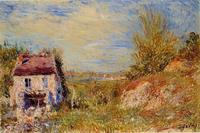
Abandoned House
Alfred Sisley
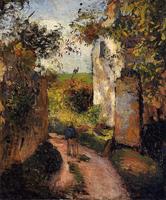
A Peasant in the Lane at Hermitage, Pontoise
Camille Pissarro
Snow Effect with Setting Sun
Claude Monet
Snow Effect with Setting Sun
Claude Monet