Expertenanalyse zu Diego Velazquezs Portrait of a Young Man
Stil: Baroque · Genre: portrait
Expert Analysis: "Portrait of a Young Man" by Diego Velázquez
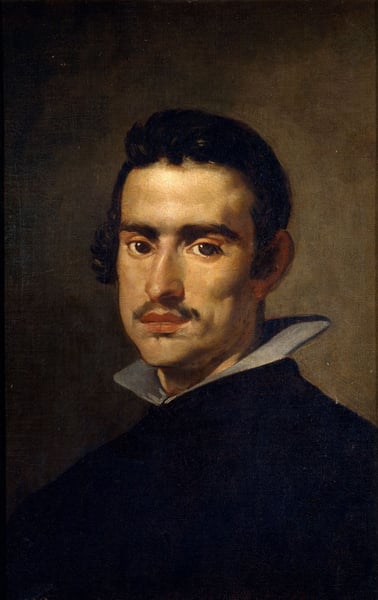
Within the context of Baroque portraiture, Diego Velázquez’s Portrait of a Young Man stands as a masterclass in the period’s shift toward psychological realism and restrained grandeur. Although the specific sitter remains unnamed beyond the young age suggested by the title, the work exemplifies Velázquez’s revolutionary approach to the genre—moving away from stiff, state-commissioned likenesses toward an intimate, almost palpable sense of human presence.
Significance within the Baroque Style: Velázquez’s handling of light and shadow is characteristically Baroque, using chiaroscuro not merely for dramatic effect but to model form with startling naturalism. The young man’s face is gently illuminated, while the background recedes into soft darkness, focusing attention on the sitter’s contemplative expression. This use of tenebrism serves a dual purpose: it heightens the three-dimensionality of the face and clothing, and it isolates the subject in a timeless, psychological space—a hallmark of Velázquez’s mature portraits.
Genre Innovation: Velázquez transforms the conventional portrait from a record of status into a study of individuality. The young man’s pose is unpretentious, his gaze direct yet unassuming. Unlike the lavish regalia of many Baroque court portraits, Velázquez often preferred subdued attire and minimal props, allowing the sitter’s inner life to emerge. Here, the subtle play of textures—the soft sheen of dark fabric, the flesh’s warmth—demonstrates his virtuosic brushwork, where close inspection reveals loose, almost sketch-like strokes that coalesce into a convincing whole from a distance.
Historical & Artistic Importance: As a leading figure of the Spanish Golden Age, Velázquez redefined the portrait genre by infusing it with the naturalism and tenebrist drama of the Baroque, yet without losing the dignity of his subjects. Portrait of a Young Man embodies this balance: it is a quiet, penetrating work that anticipates later psychological portraits, bridging the formal Baroque and the introspective sensibilities of later centuries. Its significance lies not in external spectacle, but in the profound humanity captured within a fleeting moment—a signature achievement of Velázquez’s art.
Museum / Gallery
Visuell ähnlich
20 Werke mit ähnlicher Komposition und Farbpalette
A young Man(Self-Portrait)
Diego Velazquez
Self Portrait as a Young Man
Gian Lorenzo Bernini
Portrait of a Gentleman Half Length Wearing Black
Peter Paul Rubens
Young Spanish gentleman
Diego Velazquez
Count duke of Olivares
Diego Velazquez
Philip IV
Diego Velazquez
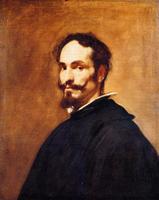
A Spanish Gentleman (Jos Nieto, Chamberlain To Queen Mariana of Austria, Wife of Philip IV)
Diego Velazquez
Self-portrait
Knud Baade
Cardinal Camillo Massimi
Diego Velazquez
Portrait of an Unknown Gentleman
Edward Bower
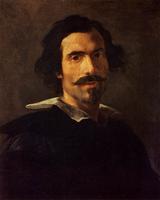
Self-Portrait
Gian Lorenzo Bernini
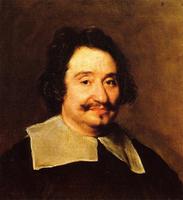
Miguel Angelo, Barber to the Pope
Diego Velazquez
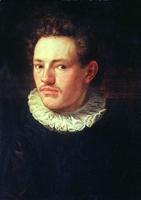
Self-portrait
Hans von Aachen
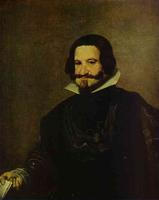
Portrait of Caspar de Guzman, Count of Olivares, Prime Minister of Philip IV
Diego Velazquez
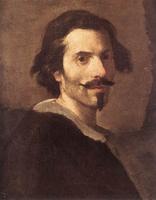
Self-Portrait as a Mature Man
Gian Lorenzo Bernini
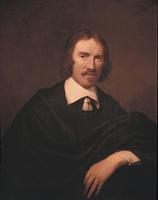
Louis Lemaistre De Sacy
Philippe de Champaigne
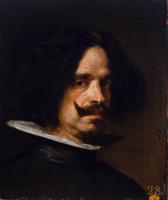
Self-Portrait
Diego Velazquez
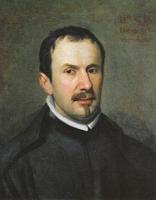
Lorenzo Van Der Hamen
Juan van der Hamen
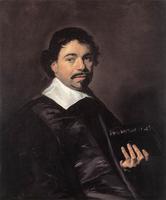
Johannes Hoornbeek
Frans Hals
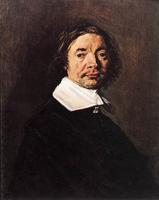
Portrait of a Man
Frans Hals