Expert analysis of Diego Velazquez’s Count duke of Olivares
Style: Baroque · Genre: portrait
As an expert art historian analyzing the provided structured facts, I can situate this work within its Baroque context and genre.
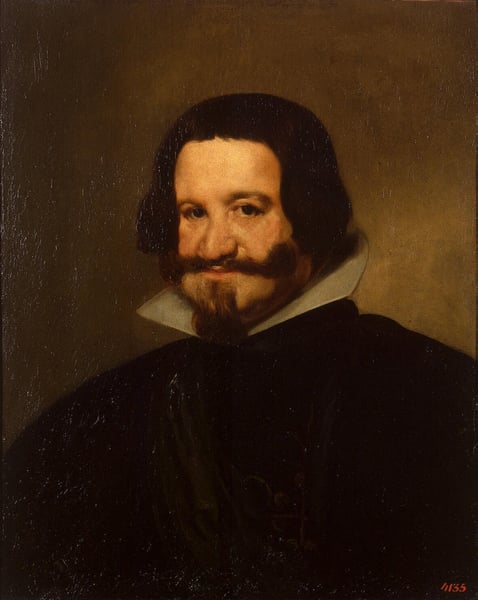
Diego Velázquez’s "Count Duke of Olivares" is a seminal example of Baroque portraiture, distinguished by its masterful synthesis of raw psychological insight and the period’s theatrical grandeur. Painted during the height of Spain’s imperial power, the work transcends mere likeness to become a statement of both personal authority and political vulnerability.
Significance within the Baroque Style: The painting exemplifies the Baroque fascination with dramatic tension and realism. Velázquez employs a stark, almost tenebristic lighting that carves the Count-Duke’s face from shadow—a direct debt to the chiaroscuro innovations of Caravaggio. This is not a static, idealized ruler; the sitter’s gaze is direct yet weary, capturing the burden of absolute power. The loose, almost impressionistic brushwork in the costume (the famous golilla or starched collar) and the sash against the dark background demonstrates Velázquez’s signature bravura technique, which prioritizes the illusion of life over meticulous detail. The diagonal thrust of the figure’s pose—swiveling in his chair as if interrupted—injects a quality of movement and nervous energy that is quintessentially Baroque, breaking the rigid frontality of Renaissance portraiture.
Significance within the Portrait Genre: As a portrait, this work is revolutionary for its psychological depth. The Count-Duke of Olivares, the powerful valido (chief minister) to King Philip IV, is not shown as a remote symbol of state but as a complex, calculating individual. Velázquez captures the fatigue and shrewdness of a courtier whose very intelligence made him a target. The painting functions as a political document: the massive but empty space around the figure suggests solitude, while the single visible hand holding a letter (likely a state missive) hints at the machinations of bureaucracy. Unlike earlier court portraits that flattered through allegory, Velázquez’s realism demystifies power, showing a man caught between his own ambition and the hopeless decline of the Spanish Habsburg empire. This humanization of authority—treating the subject not as an icon but as a person—elevates the portrait from a record of rank to a lasting meditation on the nature of political life, making it a cornerstone of the Baroque psychological portrait.
Museum / Gallery
Visually similar
20 works with related composition and palette
Portrait of a Gentleman Half Length Wearing Black
Peter Paul Rubens
Portrait of Caspar de Guzman, Count of Olivares, Prime Minister of Philip IV
Diego Velazquez
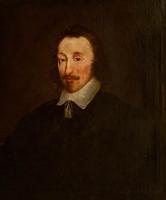
Portrait of an Unknown Gentleman
Edward Bower
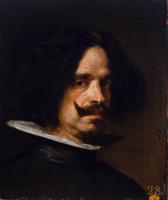
Self-Portrait
Diego Velazquez
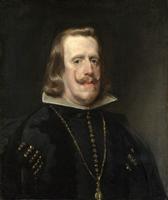
Portrait of Philip IV of Spain
Diego Velazquez
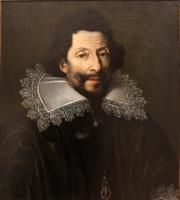
Portrait of a knight of Saint Michael
Le Nain brothers
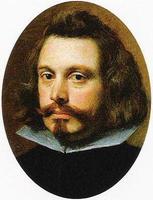
Don Diego Mexia
Juan van der Hamen
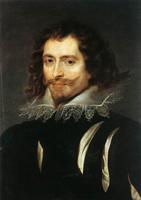
Portrait of George Villiers, 1st Duke of Buckingham
Peter Paul Rubens
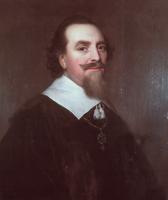
Adriaan Pauw
Gerard van Honthorst
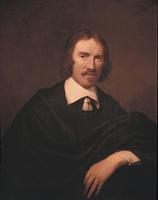
Louis Lemaistre De Sacy
Philippe de Champaigne
Miguel Angelo, Barber to the Pope
Diego Velazquez
Francisco Bandres de Abarca
Diego Velazquez
Sir Alexander Temple
Cornelius Johnson
Portrait of a bearded man, bust length, in a red doublet
Rembrandt
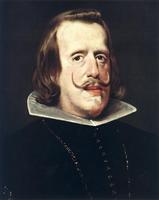
Portrait of Philip IV
Diego Velazquez
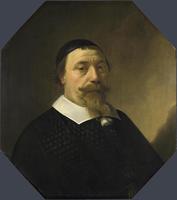
Portrait of a Bearded Man
Aelbert Cuyp
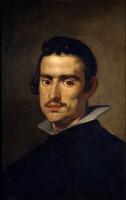
Portrait of a Young Man
Diego Velazquez
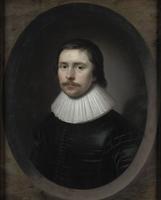
Edward Hyde, 1.er Earl of Clarendon
Cornelius Johnson
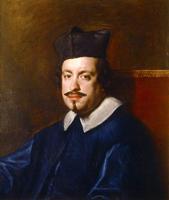
Cardinal Camillo Massimi
Diego Velazquez
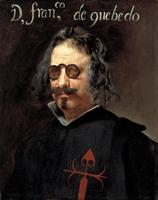
Retrato De Francisco De Quevedo (after Velázquez)
Juan van der Hamen