Expert analysis of Diego Velazquez’s Saint Paul
Style: Baroque · Genre: religious painting
Expert Analysis of "Saint Paul" by Diego Velázquez
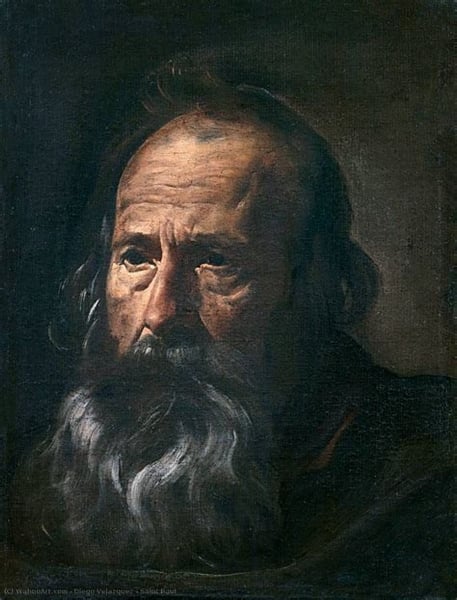
Diego Velázquez’s Saint Paul exemplifies the Baroque mastery of naturalism, chiaroscuro, and psychological immediacy that define the artist’s revolutionary approach to religious painting. Created during his early period in Seville, this work demonstrates how Velázquez upends conventional saintly iconography by treating a biblical figure with the same unflinching realism he applied to court portraits and genre scenes.
Significance within the Baroque Style
The painting’s profound impact stems from Velázquez’s rejection of idealized, otherworldly sainthood. Instead, he presents Saint Paul as a tangible, aging man caught in a moment of intense inner reflection. The dramatic chiaroscuro—a stark contrast between the illuminated face and hands and the deep, shadowed background—focuses attention on Paul’s weathered features, furrowed brow, and downcast eyes. This tenebristic technique, influenced by Caravaggio, is not mere theatricality but a tool for psychological depth: the light seems to emanate from the saint’s own contemplative soul, suggesting divine inspiration residing in human frailty.
Realism and Religious Innovation
Velázquez’s handling of Saint Paul’s attributes—the sword (symbol of his martyrdom) and the book (his epistles)—is equally groundbreaking. These objects are not posed as stiff symbols; the sword is held casually, its blade half-sheathed, while the heavy book rests on a stone ledge, its pages worn. This tactile, mundane treatment grounds the supernatural in the physical world. Paul’s rough woolen cloak and tangled beard reinforce the artist’s interest in texture and authenticity, making the figure feel like a living philosopher rather than a remote holy figure.
Legacy and Context
Painted around 1619–1620, Saint Paul belongs to a series of bust-length saints Velázquez executed for monastic patrons in Seville. It reveals his early experimentation with bodegón-like realism, merging religious genre with mundane observation. The work is significant because it foreshadows Velázquez’s later ability to infuse all subjects—whether kings, dwarfs, or mythological figures—with profound humanity. Here, the saint’s humble, contemplative demeanor bridges the gap between common experience and sacred narrative, a hallmark of Spanish Baroque spirituality and a testament to Velázquez’s genius: making the divine feel utterly, movingly real.
Museum / Gallery
Visually similar
20 works with related composition and palette
Portrait of an Old Jew
Antoine Pesne
Portrait of an Old Man
Jan Lievens
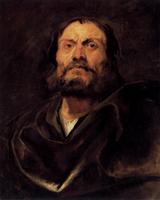
An Apostle
Anthony van Dyck
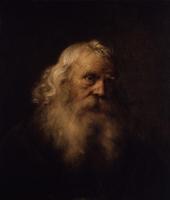
Head of an Old Man
Jan Lievens
Old man brim
Domenico Fiasella
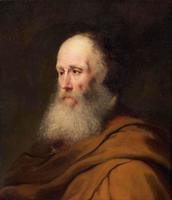
Bearded Old Man Wearing a Brown Cloak
Jan Lievens
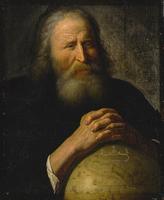
Heraclitus With A Globe
Johannes Moreelse
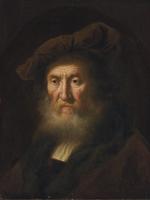
Head of an Old Man
Salomon Koninck
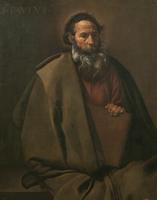
St. Paul
Diego Velazquez
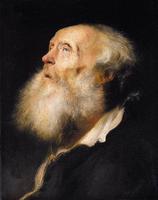
Study of an Old Man
Jan Lievens
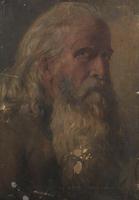
Head of An Old Man
Thomas Stuart Smith
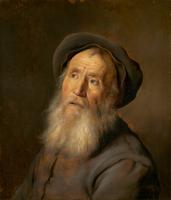
Bearded Man with a Beret
Jan Lievens
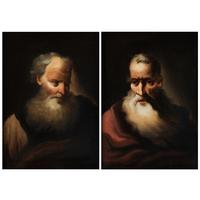
PAAR PROPHETENKÖPFE
Christian Wilhelm Ernst Dietrich
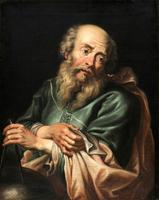
Galileo Galilei
Peter Paul Rubens
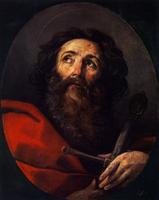
Saint Paul
Guido Reni
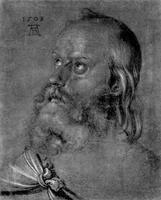
Head of an apostle
Albrecht Durer
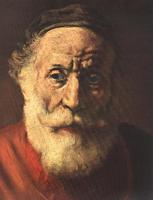
Old man
Rembrandt
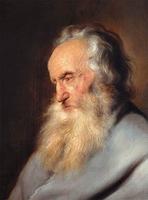
Old Bearded Man
Jan Lievens
Old Scriba
Salomon Koninck
Tronie of An Old Man
Jan Lievens