Expert Analysis of "On the Volga" by Boris Kustodiev
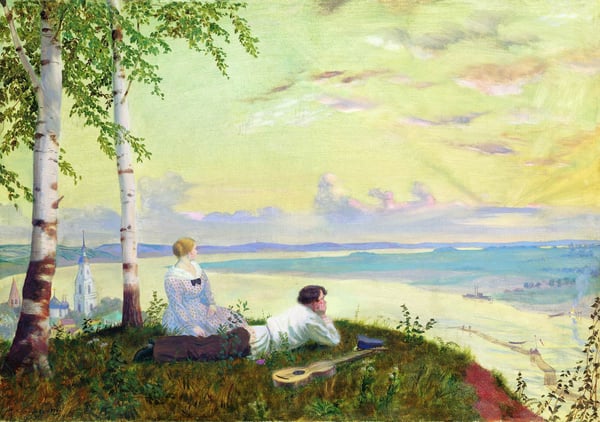
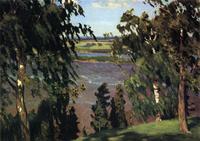
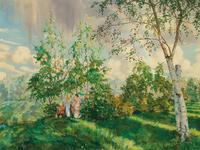
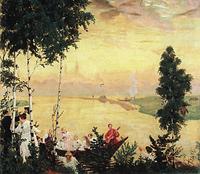
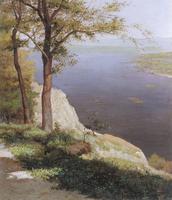
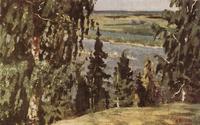
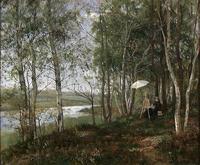
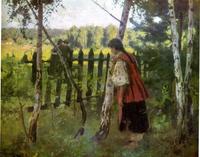
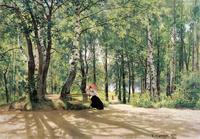
As a work of Realist landscape painting, "On the Volga" exemplifies Boris Kustodiev’s dedication to capturing the enduring spirit of Russian life and geography. Within the Realist tradition, which prioritized truthful, unidealized depictions of everyday scenes, this painting stands out for its vibrant yet grounded portrayal of the Volga River—a central, almost mythic artery in Russian culture. Kustodiev merges meticulous observation with a palpable sense of national identity: the expansive waterway, the characteristic light, and the subtle human presence (often implied in his landscapes) all reinforce the Volga's role as both a literal and symbolic lifeline. The work’s significance lies in how it embodies the late 19th‑ and early 20th‑century Russian Realist impulse to document the country’s vastness and daily rhythms, while also foreshadowing the bright, folk‑influenced palette that would later define Kustodiev’s mature style. It is a testament to Realism’s power to elevate a familiar view into an emblem of cultural memory.