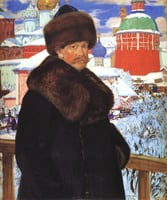
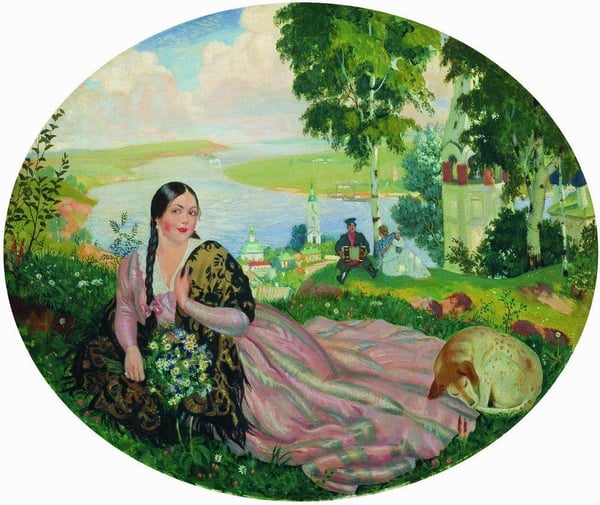
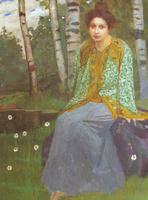
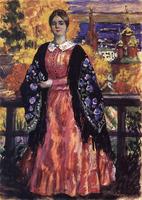
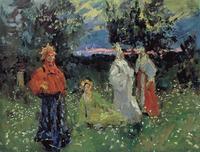
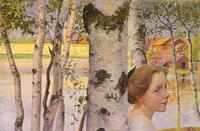
"The Girl on the Volga" by Boris Kustodiev stands as a compelling intersection of Russian national identity and the international Art Nouveau movement. Executed in a portrait genre, the work is significant for how it melds the decorative, sinuous lines and vibrant, flat color planes characteristic of Art Nouveau with distinctly Russian subject matter—the young woman set against the backdrop of the great Volga River. Kustodiev, a master of what is often termed "Russian Modern," used this portrait not merely to depict a sitter but to evoke a cultural archetype: the healthy, spirited Russian girl, framed by the expansive, beloved river landscape. The work’s importance lies in its ability to elevate a regional, folk-inspired portrait into a modern, stylized icon—where the rhythmic curves of the figure and the rich, textured environment echo the Art Nouveau obsession with organic form, yet remain firmly rooted in the specificity of Russian life and tradition. This fusion marks a key moment in early 20th-century Russian art, proving that modernist aesthetics could serve as a vehicle for national sentiment without sacrificing decorative elegance or emotional warmth.