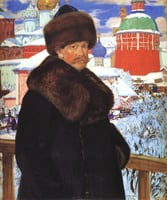
Analisi esperta di Smith Siluyan di Boris Kustodiev
Stile: Naïve Art (Primitivism) · Genere: design
Expert Analysis: "Smith Siluyan" by Boris Kustodiev
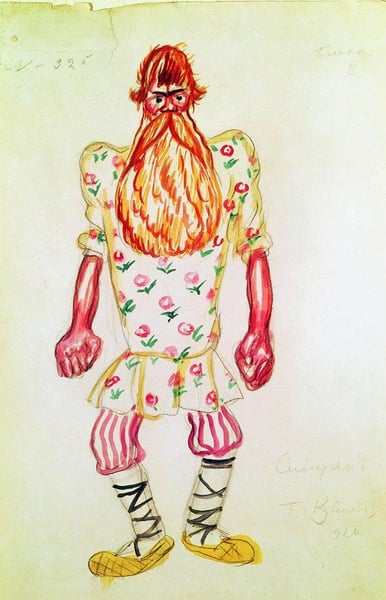
Boris Kustodiev’s Smith Siluyan stands as a compelling example of Naïve Art (Primitivism) applied to the genre of design, revealing the artist’s deliberate embrace of a seemingly unsophisticated aesthetic to convey deeper cultural and symbolic meaning. Within the context of Kustodiev’s broader oeuvre—where he often celebrated Russian folk life and the vibrancy of provincial towns—this work is significant for its fusion of decorative purpose with a raw, archetypal vision of the artisan.
Stylistically, the painting exemplifies the Primitivist tendency to reject academic polish in favor of flat, bright color planes, simplified forms, and a childlike directness. In Smith Siluyan, this approach is not naive in a pejorative sense but rather a conscious strategy to evoke the mythical, almost iconic status of the blacksmith. The figure of Siluyan likely dominates the composition with exaggerated proportions and a monumental stillness, echoing the vernacular Russian lubok (folk print) tradition. The genre of "design" suggests that the piece may have been intended as a decorative panel or a pattern study, yet Kustodiev elevates it by imbuing the seemingly simple image with a rhythmic, almost heraldic order. The bold contours and unmodulated colors function as visual shorthand for strength, labor, and tradition—qualities central to the Primitivist fascination with pre-industrial authenticity.
What makes Smith Siluyan particularly significant is how it negotiates the tension between popular art and high culture. Kustodiev, a classically trained artist, deliberately adopts a crude formal language to celebrate the unsung heroism of a rural craftsman. In doing so, he aligns with the Primitivist movement’s goal of finding pure, unalienated expression in folk or “primitive” sources. The work’s designation as "design" further underscores its departure from conventional easel painting: it is likely conceived as an object of functional beauty—perhaps for a poster, book illustration, or interior decoration—thus democratizing art by making it accessible within everyday life. Through Smith Siluyan, Kustodiev transforms the blacksmith’s forge into a timeless emblem of national character, proving that the simplest aesthetic choices can yield profound symbolic resonance.
Visivamente simili
20 opere con composizione e palette affini
Sacrificer
Nicholas Roerich
Portrait of Miss Waerndorfer
Egon Schiele
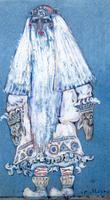
Father Frost
Nicholas Roerich
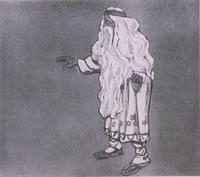
Sketch of costumes for "Snow Maiden"
Nicholas Roerich
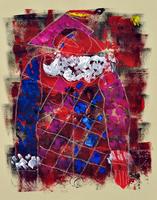
Harlequin´s Resignation
George Stefanescu
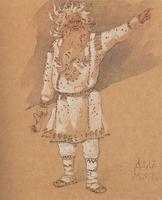
Father Frost (Ded Moroz)
Viktor Vasnetsov
Design of costume for "Pulcinella"
Pablo Picasso
The guy from Tula
Boris Kustodiev
Old Timer
Kazimir Malevich
pseudoalbus
Jessica Mozzini
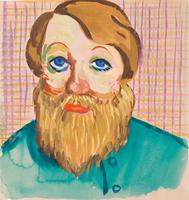
Untitled
John Currin
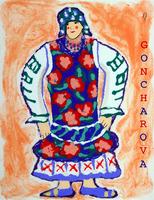
Goncharova
Miriam Schapiro
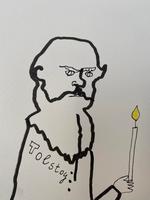
Untitled
Alevtyna Kakhidze
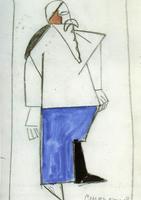
Costume for Victory over the Sun: An Old Watchmaker
Kazimir Malevich
Picture book for the niece of Ditha Mautner von Markhof
Koloman Moser
Self Portrait
Egon Schiele
New Man
Kazimir Malevich
Banquet at the Police Chief's House
Marc Chagall
Anna Margit, Masnins Kislány 1943
Anna Margit
The guy from Tula
Boris Kustodiev