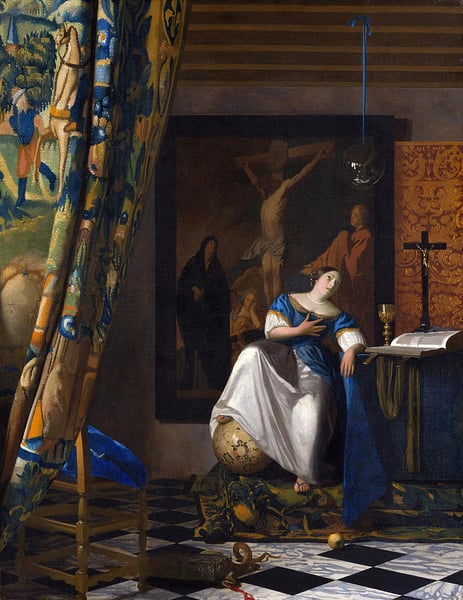
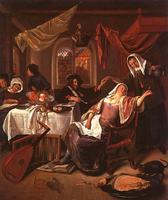
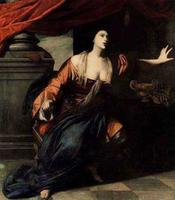
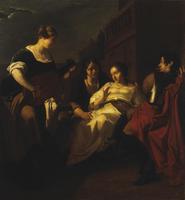
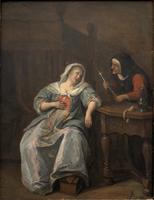
Based solely on the provided facts, the significance of Allegory on Faith by Johannes Vermeer lies in its integration of the dramatic, dynamic characteristics of the Baroque style with the intellectual and symbolic demands of the allegorical painting genre. Within the Baroque period, allegorical works were often used to convey complex moral or spiritual truths through personification and emblematic objects. Vermeer’s treatment here is notable for applying the intense naturalism and subtle light effects typical of his era to a subject that requires the viewer to decode layered meanings. This fusion elevates the work beyond mere illustration, making it a sophisticated example of how Baroque artists could use everyday, believable elements to represent abstract concepts—thereby reinforcing the period's emphasis on both emotional engagement and intellectual reflection.