
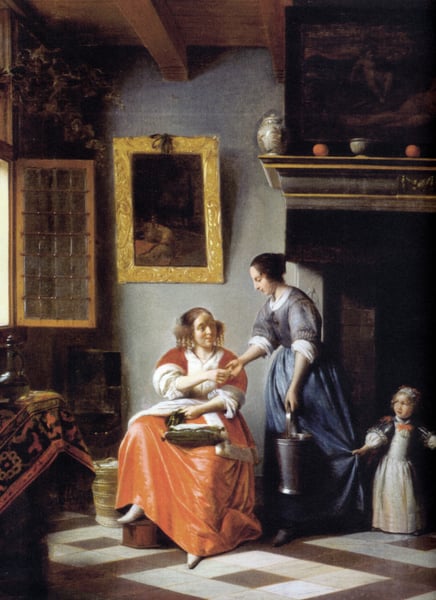
Analyse experte de Woman hands over money to her servant de Pieter de Hooch
Style : Baroque · Genre : genre painting
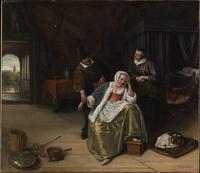
As an expert art historian, I will provide an analysis based solely on the supplied facts: the artwork is Woman hands over money to her servant by Pieter de Hooch, created in the Baroque style and belonging to the genre of genre painting.
Significance within the Baroque Style and Genre Painting:
Pieter de Hooch’s Woman hands over money to her servant exemplifies the Dutch Baroque emphasis on intimate, everyday life—a hallmark of genre painting. Unlike the dramatic religious or mythological scenes of Italian Baroque, de Hooch captures a quiet, domestic transaction with remarkable psychological depth and compositional precision.
1. Mastery of Light and Space:
The painting’s significance lies in its sophisticated handling of light, a defining feature of Dutch Baroque. De Hooch uses natural illumination to define the interior space, casting soft shadows and highlighting the exchange of money. The open doorway and tiled floor create a sense of recession, leading the eye into the room and emphasizing the spatial clarity that de Hooch perfected. This control of light and perspective was influential in elevating genre scenes to the level of high art.
2. Social Commentary Through Gesture:
The central action—the woman handing money to her servant—is a subtle but telling moment of class relations in 17th-century Dutch society. De Hooch’s Baroque sense of narrative is understated: the gesture is dignified, the servant’s posture respectful. This small drama of trust and duty reflects the moralizing undertone common in Dutch genre painting, where everyday actions often carry symbolic weight about virtue, economy, and household order.
3. Contribution to the Genre:
As a genre painter, de Hooch is celebrated for elevating the domestic interior into a subject worthy of serious artistic study. Woman hands over money to her servant is significant because it demonstrates how Baroque art could find grandeur in the quotidian. The careful arrangement of objects—the money, the servant’s apron, the tiled floor—forms a cohesive whole that celebrates craftsmanship and domestic harmony, a core value of the Dutch Golden Age.
In summary, this artwork is a quintessential example of Dutch Baroque genre painting, notable for its luminous spatial construction and its quiet observation of human interaction, hallmarks that secured Pieter de Hooch’s legacy as a master of the intimate scene.
Visuellement similaire
20 œuvres à la composition et à la palette proches
Brothel Scene
Frans van Mieris the Elder
Interior with a Woman and Her Maid
Michiel van Musscher
Man Offering a Glass of Wine to a Woman
Pieter de Hooch
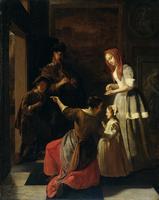
De Speellieden
Jacob Ochtervelt
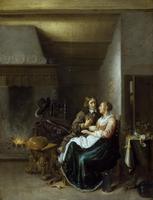
a Couple in An Interior
Jan Miense Molenaer
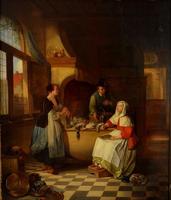
THE HUNTSMAN IN THE KITCHEN
Alexis Van Hamme
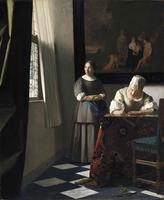
Lady Writing a Letter with Her Maid
Johannes Vermeer
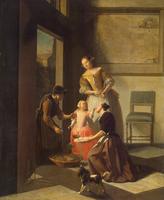
Buying Grapes
Jacob Ochtervelt
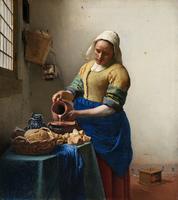
The Milkmaid
Johannes Vermeer
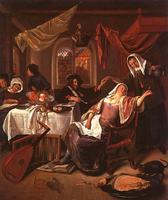
Dissolute Household
Jan Steen
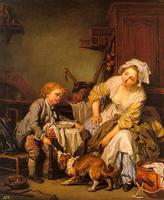
The Spoiled Child
Jean-Baptiste Greuze
Maid at the Window
Gerrit Dou
Prayer before Meal
Jan Steen
A sick child
Pieter de Hooch
The idle servant
Nicolaes Maes
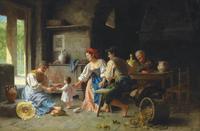
First Steps
Giovanni Battista Torriglia
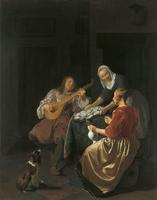
Eating Oysters
Jacob Ochtervelt
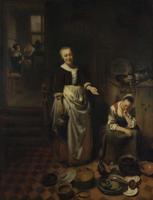
Interior with Sleeping Kitchen Maid - The Idle Servant
Nicolaes Maes
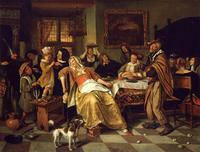
Twelfth Night
Jan Steen
The Lovesick Maiden
Jan Steen