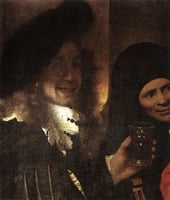
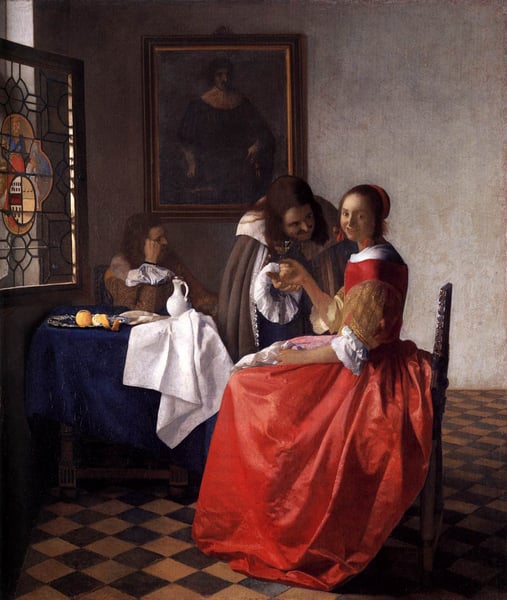
Deskundige analyse van A Lady and Two Gentlemen van Johannes Vermeer
Stijl: Baroque · Genre: genre painting
Based on the structured facts provided, here is an expert analysis of "A Lady and Two Gentlemen" by Johannes Vermeer.
Art Historical Analysis: "A Lady and Two Gentlemen"
Artist: Johannes Vermeer
Style: Baroque
Genre: Genre Painting
Significance: A masterful example of Vermeer's quiet, luminous interior scenes that elevate everyday Dutch social life into a study of light, composition, and psychological tension.
Significance within the Baroque Style
While the Baroque period is often associated with dramatic dynamism, grandiose religious scenes, and exuberant ornamentation (as seen in the work of Caravaggio or Bernini), Vermeer represents a distinct, introspective vein of Dutch Baroque. His significance lies in how he translates Baroque principles into a domestic scale:
- Chiaroscuro and Luminosity: Vermeer is renowned for his meticulous rendering of natural light. In this painting, he uses a cool, silvery daylight entering from a left-side window to model the figures and objects with extraordinary subtlety. Unlike the stark, theatrical contrasts of Italian Baroque, Vermeer’s chiaroscuro is soft, diffused, and almost photographic, creating a profound sense of stillness and intimacy.
- Everyday as Heroic: The Baroque era celebrated grandeur, but Vermeer, along with other Dutch genre painters, found grandeur in the quotidian. A Lady and Two Gentlemen transforms a simple musical or social encounter into a composition of geometric precision and psychological depth. The elegance of the figures' attire and the refinement of the setting reflect the wealth and domestic culture of 17th-century Delft.
Significance within Genre Painting
As a genre painting—a depiction of everyday life—this work stands out for its ambiguity and narrative restraint. Unlike many Dutch genre scenes that offer clear moralizing messages (e.g., warnings against vice or vanity), Vermeer’s work is enigmatic:
- Compositional Harmony: The arrangement of the lady and two gentlemen forms a delicate triangular composition, a hallmark of Vermeer's balanced design. The chessboard floor tiles, the map on the wall, and the musical instruments (likely a virginal or lute) create a structured, almost abstract grid that anchors the figures. This geometric order contrasts with the implied social interaction, focusing the viewer’s attention on the subtle gestures and glances.
- Psychological Tension: The significance of the piece lies in what is not shown. The interaction between the three figures—the lady at the instrument, the standing gentleman, and the seated observer—suggests a moment of courtship or musical performance, but the expressions are neutral. Vermeer denies us a clear narrative, compelling the viewer to project a story. This open-ended quality is a key reason his genre scenes resonate as timeless meditations on human connection.
- Symbolism and Objects: True to the Dutch genre tradition, objects carry symbolic weight. The music-making alludes to harmony or love, while the presence of a curtain or picture on the wall might reference the theme of painting itself—an art within art comment. However, Vermeer prioritizes optical truth over didactic symbolism. The way light hits the brass candlestick or the white collar of the lady is as significant as any hidden meaning.
Overall Significance
A Lady and Two Gentlemen exemplifies Vermeer’s genius for capturing a suspended moment—a fleeting instant made eternal through light and composition. It demonstrates how Baroque art can be both serene and complex, and how genre painting can achieve the same level of intellectual and emotional depth as history painting. Together with his other masterworks, this painting solidifies Vermeer’s status not merely as a recorder of 17th-century Dutch life, but as a poet of light and silence.
Visueel vergelijkbaar
20 werken met verwante compositie en kleurenpalet
The Sleeping Officer
Jacob Ochtervelt
Lady Writing a Letter with Her Maid
Johannes Vermeer
Merry Society
Johannes Vermeer
The Visit
Pieter de Hooch
Brothel Scene
Frans van Mieris the Elder
Woman drinking with soldiers
Pieter de Hooch
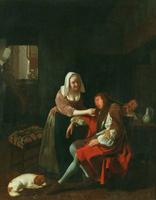
Le Cavalier Endormi
Jacob Ochtervelt
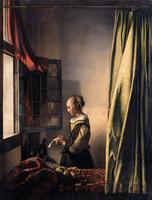
Girl Reading a Letter at an Open Window
Johannes Vermeer
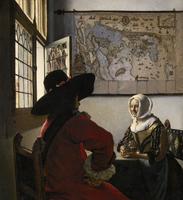
Officer and Laughing Girl
Johannes Vermeer
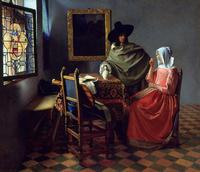
The glass of wine
Johannes Vermeer
The Lovesick Maiden
Jan Steen
Soldiers Playing Cards
Pieter de Hooch
Woman hands over money to her servant
Pieter de Hooch
the Lemon Slice
Jacob Ochtervelt
Dissolute Household
Jan Steen
A Conversation Between An Artist and a Connoisseur
Pieter Codde
Curiosity
Gerard Terborch
Prayer before Meal
Jan Steen
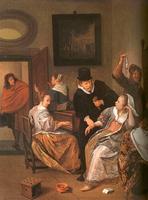
Doctor's Visit
Jan Steen
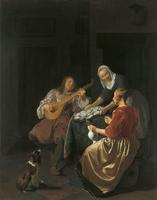
Eating Oysters
Jacob Ochtervelt