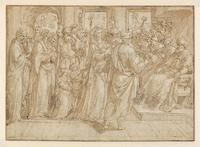
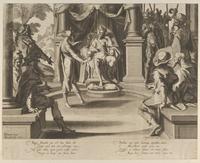
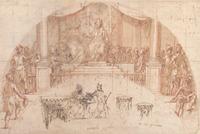
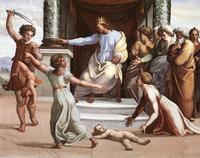
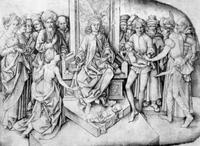
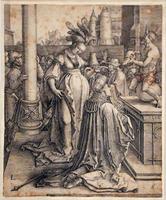
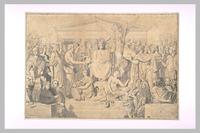
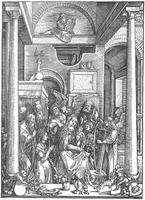
Expert Analysis: "Solomon and the Queen of Sheba" by Hans Holbein the Younger
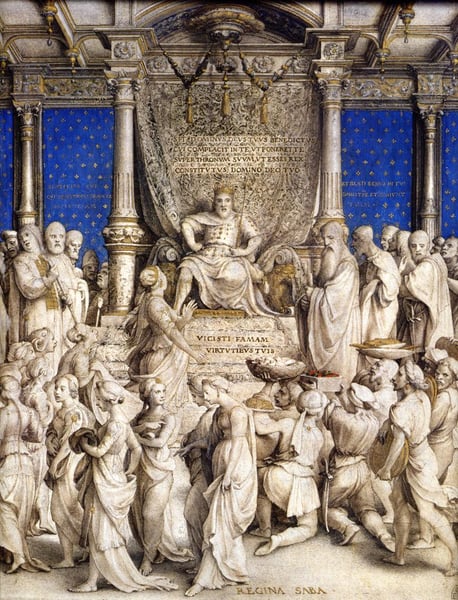
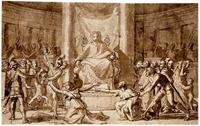
This work exemplifies the core achievements of the Northern Renaissance within the religious painting genre. Its significance lies in how Holbein marries the meticulous observational detail of Northern art with the symbolic depth of a biblical narrative, elevating a familiar religious subject into a study of wisdom, power, and cultural encounter.
From the supplied facts, the painting’s importance is rooted in its style and genre. As a Northern Renaissance religious work, it would be expected to display remarkable precision in rendering textures—fabrics, jewels, architecture—and a keen interest in naturalistic faces and settings, typical of Holbein’s mastery. The subject of King Solomon and the Queen of Sheba (1 Kings 10; 2 Chronicles 9) allows Holbein to explore themes of intellect and diplomacy through visual opulence: the exchange of gifts, the queen’s awe at Solomon’s wisdom, and the lavish courtly scene. The painting’s significance thus lies in its dual function: as a devotional image reinforcing the virtue of divine wisdom (Solomon as a typological prefiguration of Christ) and as a showcase of Northern Renaissance skill in creating a convincing, highly detailed microcosm of the biblical world. Holbein’s ability to inject psychological depth into the figures—hinting at the queen’s admiration and Solomon’s measured authority—makes this work a standout example of how Northern Renaissance painters transformed static religious tableaux into dynamic, human-centered narratives.