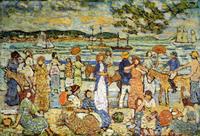
Expert Analysis: Crepuscule (also known as Along the Shore or Beach) by Maurice Prendergast
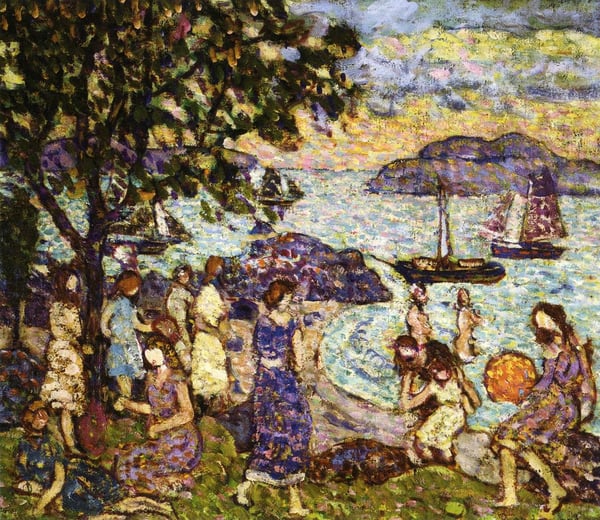
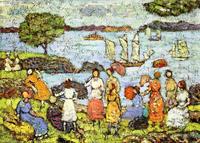
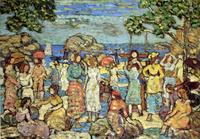
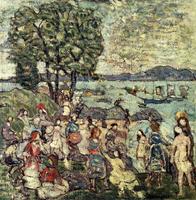
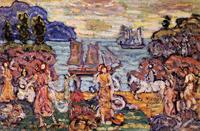
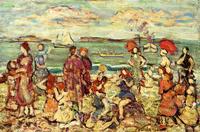
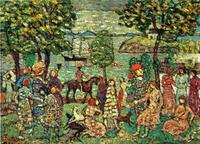
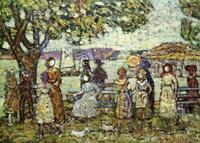
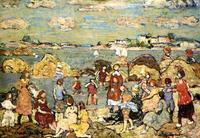
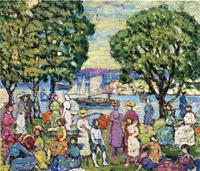
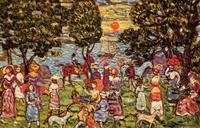
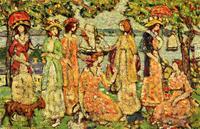
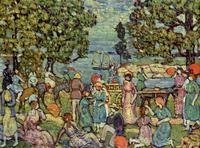
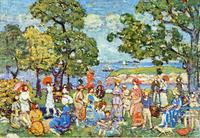
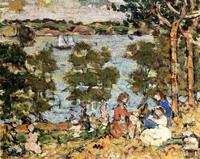
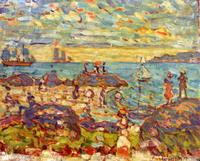
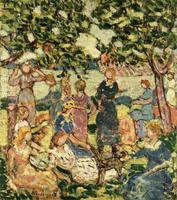
Maurice Prendergast’s Crepuscule stands as a luminous exemplar of Post-Impressionist genre painting, where the ordinary scene of a shoreline at dusk becomes a vibrant tapestry of color, pattern, and mood. The work’s significance lies in how Prendergast pushes beyond Impressionism’s fleeting light effects to embrace a more decorative, almost mosaic-like structure—a hallmark of his mature style. Rather than replicating naturalistic detail, he uses bold, rhythmic patches of pigment to evoke the twilight hour, compressing space and flattening forms into a harmonious, allover design. This approach aligns with Post-Impressionism’s broader turn toward subjective expression and compositional order.
As a genre painting, Crepuscule captures a quintessentially modern leisure scene—figures strolling or gathering along the shore—but Prendergast elevates it through his distinctive color harmonies. The cool blues and lavenders of the evening sky contrast with warm touches of ochre and pink, creating a sense of quiet animation. His technique, influenced by both the Nabis’ decorative flatness and the Fauves’ intensity, anticipates early 20th-century modernism. Within Prendergast’s own oeuvre, this work is significant for its synthesis of Impressionist spontaneity with a more deliberate, patterned surface—a contribution that helped redefine American Post-Impressionism as both intimate and boldly abstract in spirit.