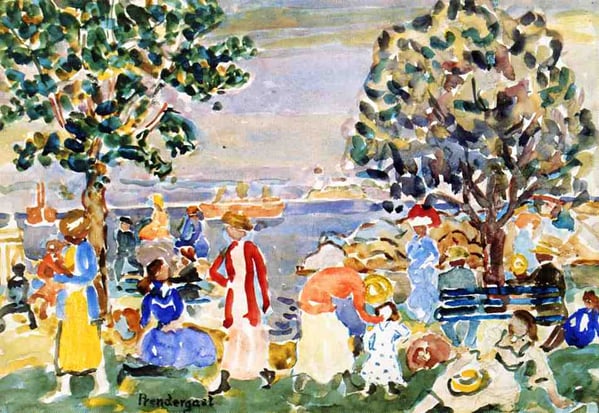
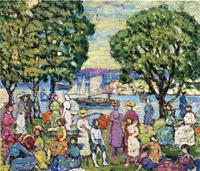
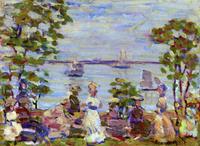
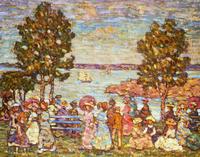
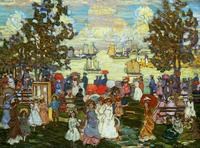
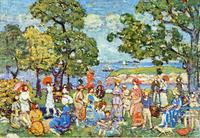
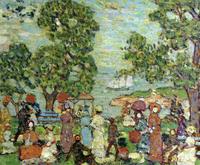
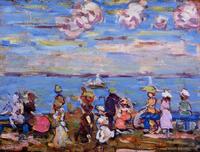
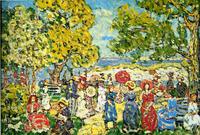
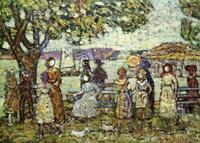
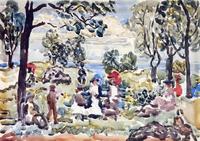
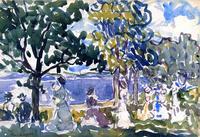
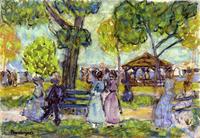
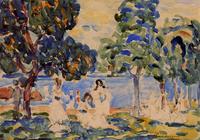
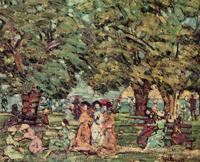
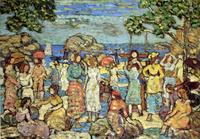
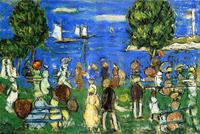
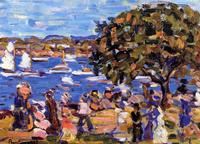
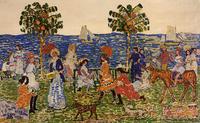
"Salem Harbor No. 1" by Maurice Prendergast is a significant example of Naïve Art (Primitivism) applied to American genre painting. Prendergast intentionally adopts a deliberately childlike, untutored style—flattening perspective, simplifying forms, and using vibrant, unmodulated color—to capture the bustling, everyday activity of Salem Harbor. This approach strips away academic conventions, allowing the scene’s rhythmic patterns and lively human interactions to take center stage. The work’s importance lies in how Prendergast channels European Post-Impressionist and Fauve influences (particularly the decorative, mosaic-like brushwork of Vuillard and the bold color of Matisse) while grounding them in a distinctively American, vernacular subject. By treating a working harbor with the same formal playfulness reserved for folk art, Prendergast elevates the mundane to the monumental, making "Salem Harbor No. 1" a pioneering fusion of modernism, primitivism, and democratic observation that anticipates later American modernist approaches to everyday life.