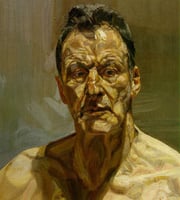
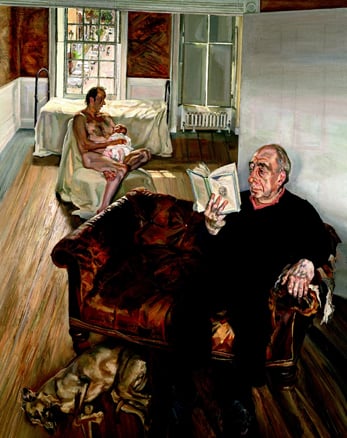
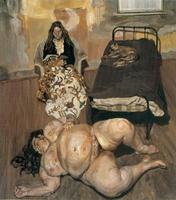
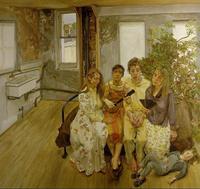
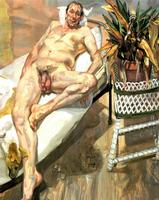
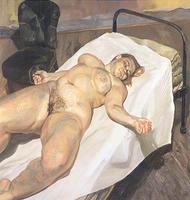
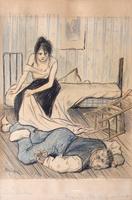
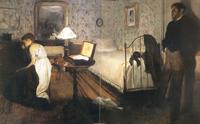
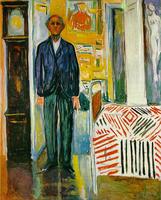
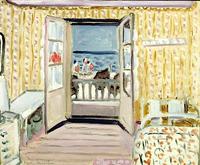
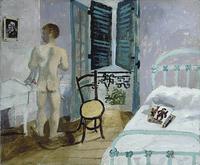
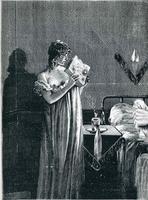
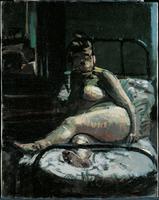
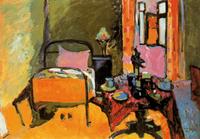
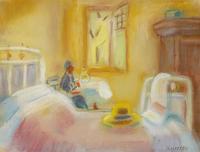
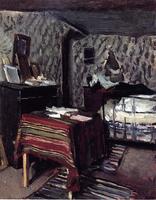
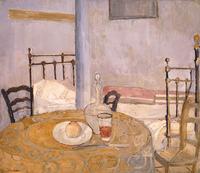
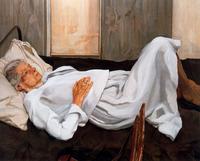
In Grand Interior, Notting Hill, Lucian Freud applies the principles of Expressionism to the genre painting tradition, elevating an ordinary domestic scene into a potent psychological study. The work’s significance lies in how Freud uses expressive distortion—exaggerated forms, dense brushwork, and somber, unnatural colors—to strip away the genteel veneer of a middle-class interior. Rather than simply documenting everyday life, he transforms the room and its occupants into a raw, confrontational space where emotional tension and vulnerability become palpable. This fusion of Expressionist intensity with genre realism challenges viewers to see the familiar as strange and unsettling, marking Freud’s contribution to modern figurative painting as deeply introspective and unflinching.