
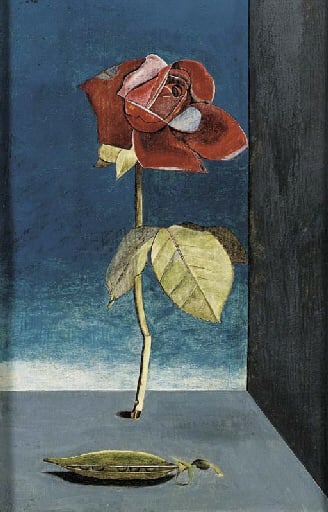
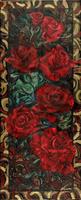
Expert analysis of Lucian Freud’s Rose and Sweet Pea
Style: Surrealism · Genre: flower painting
"Rose and Sweet Pea" by Lucian Freud is a significant work within the Surrealist movement for its subversion of the traditional flower painting genre. By applying Surrealism—a style defined by dreamlike, uncanny, or irrational juxtapositions—to a subject typically associated with decorative or naturalistic still life, Freud challenges conventional expectations. The specific pairing of rose and sweet pea in the title suggests a deliberate, possibly symbolic choice, yet without external context, the focus remains on how the artist’s Surrealist treatment transforms ordinary flora into an object of psychological or mysterious resonance. This tension between the familiar subject and the unsettling style marks the painting as a notable example of Surrealism’s ability to infiltrate and reinvent even the most established genres.
Visually similar
20 works with related composition and palette
Meditative Rose
Salvador Dali
Trois roses dans un vase
Tsuguharu Foujita
Two Pink Roses
Horace Pippin
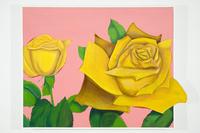
Lilli Marlene
Marjorie Strider
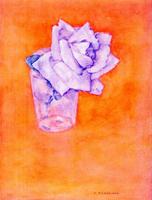
White Rose in a Glass
Piet Mondrian
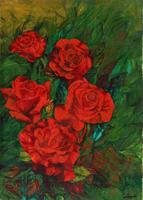
Roses I
Małgorzata Serwatka
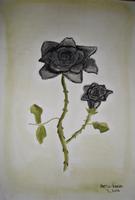
Rosas negras
Martin Pereira
Roses IV
Małgorzata Serwatka
Roses II
Małgorzata Serwatka
Bouquet of Roses
Valentin Khrushch
Still Life with Roses
Paul de Longpré
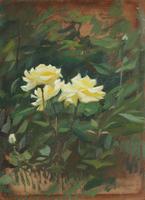
Wild Roses
Constantin Artachino
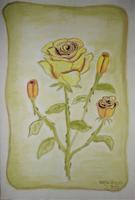
Rosas amarillas
Martin Pereira
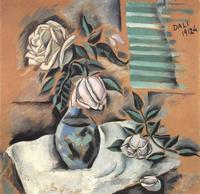
Bouquet (L'Important c'est la Rose)
Salvador Dali
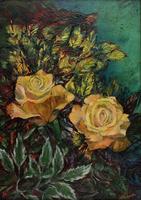
Roses III
Małgorzata Serwatka
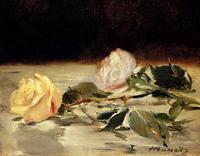
Two roses on a tablecloth
Edouard Manet
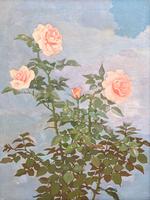
Roses
Hryhorii Havrylenko
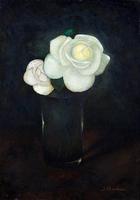
Camelia's in Glas
Jan Mankes
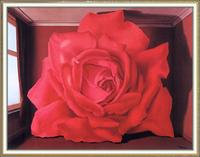
The tomb of the wrestlers
Rene Magritte
Roses VI
Małgorzata Serwatka